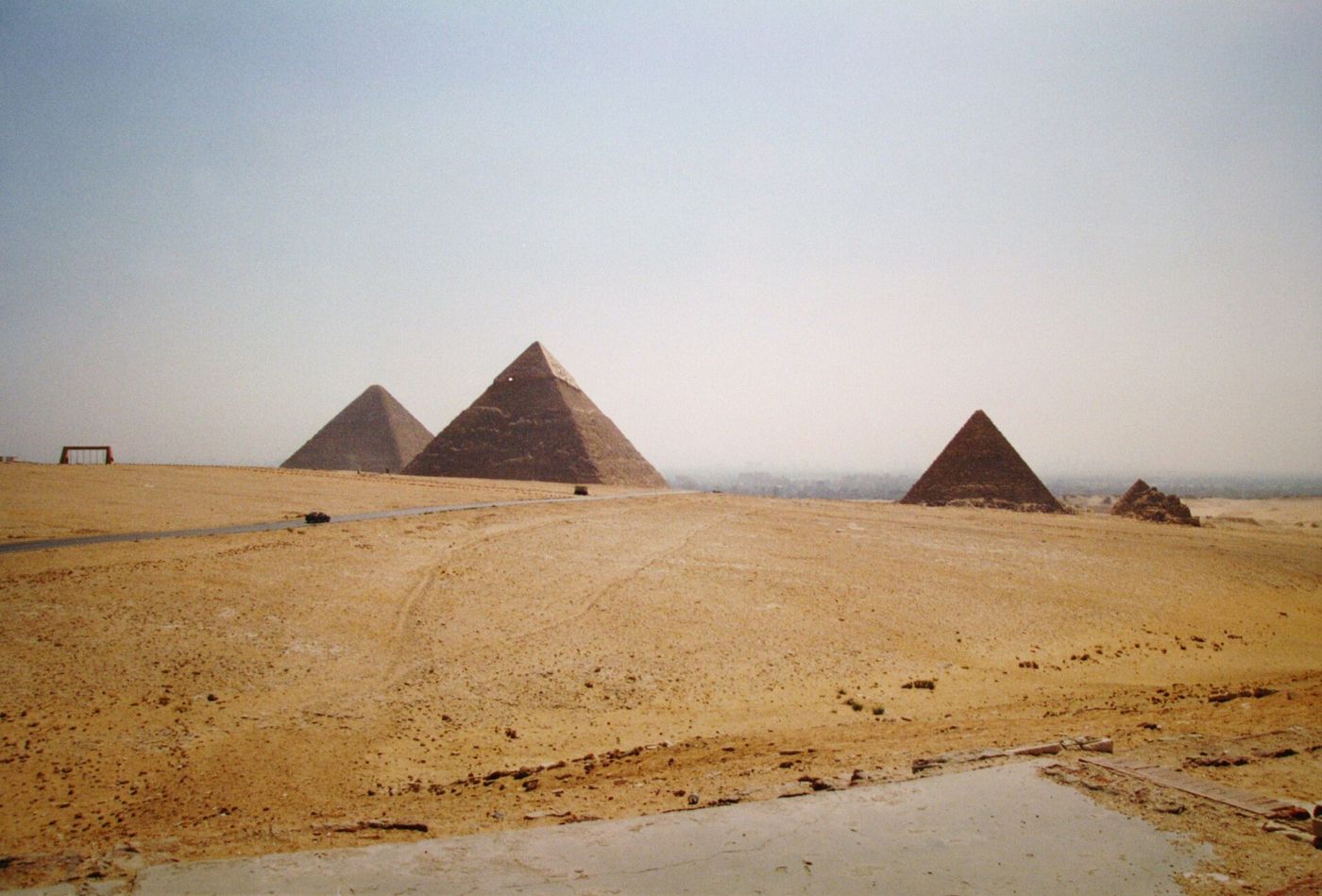
The Great Pyramid of Khufu
Now about 451 feet (138 meters) high, most of its outer casing gone. Inside, a corridor climbs through the Grand Gallery to the granite-lined King's Chamber; going in is a separate ticket.
Home / Attractions / Pyramids of Giza
Cairo & Giza · Giza Plateau
Three royal pyramids, the Great Sphinx and the Valley Temple, built in Egypt's 4th dynasty on the plateau at the western edge of Cairo.
The Pyramids of Giza are three 4th-dynasty royal pyramids on a rocky plateau on the west bank of the Nile, at the edge of today's Cairo. They were built for the kings Khufu, Khafre and Menkaure, and below them lie the Great Sphinx and Khafre's Valley Temple. The Great Pyramid of Khufu is the only one of the Seven Wonders of the ancient world still standing.
The plateau is the northern end of the necropolis of Memphis, the first capital of ancient Egypt, which runs south past Saqqara to Dahshur and holds more than thirty-eight pyramids. UNESCO inscribed it as a World Heritage site in 1979, as Memphis and its Necropolis.
Our pyramids tours cover the plateau, and all our Cairo day tours are listed on one page.
Now about 451 feet (138 meters) high, most of its outer casing gone. Inside, a corridor climbs through the Grand Gallery to the granite-lined King's Chamber; going in is a separate ticket.
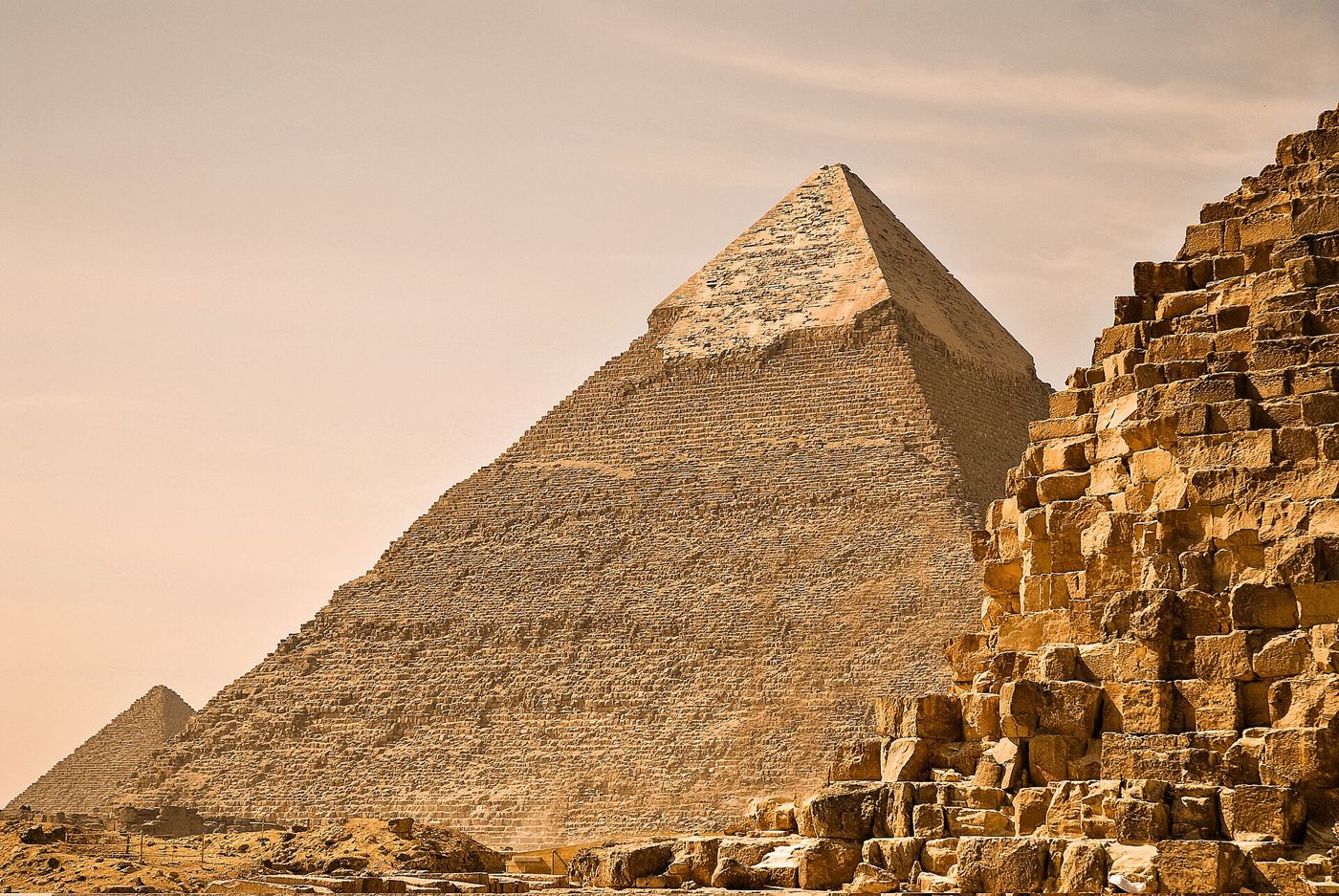
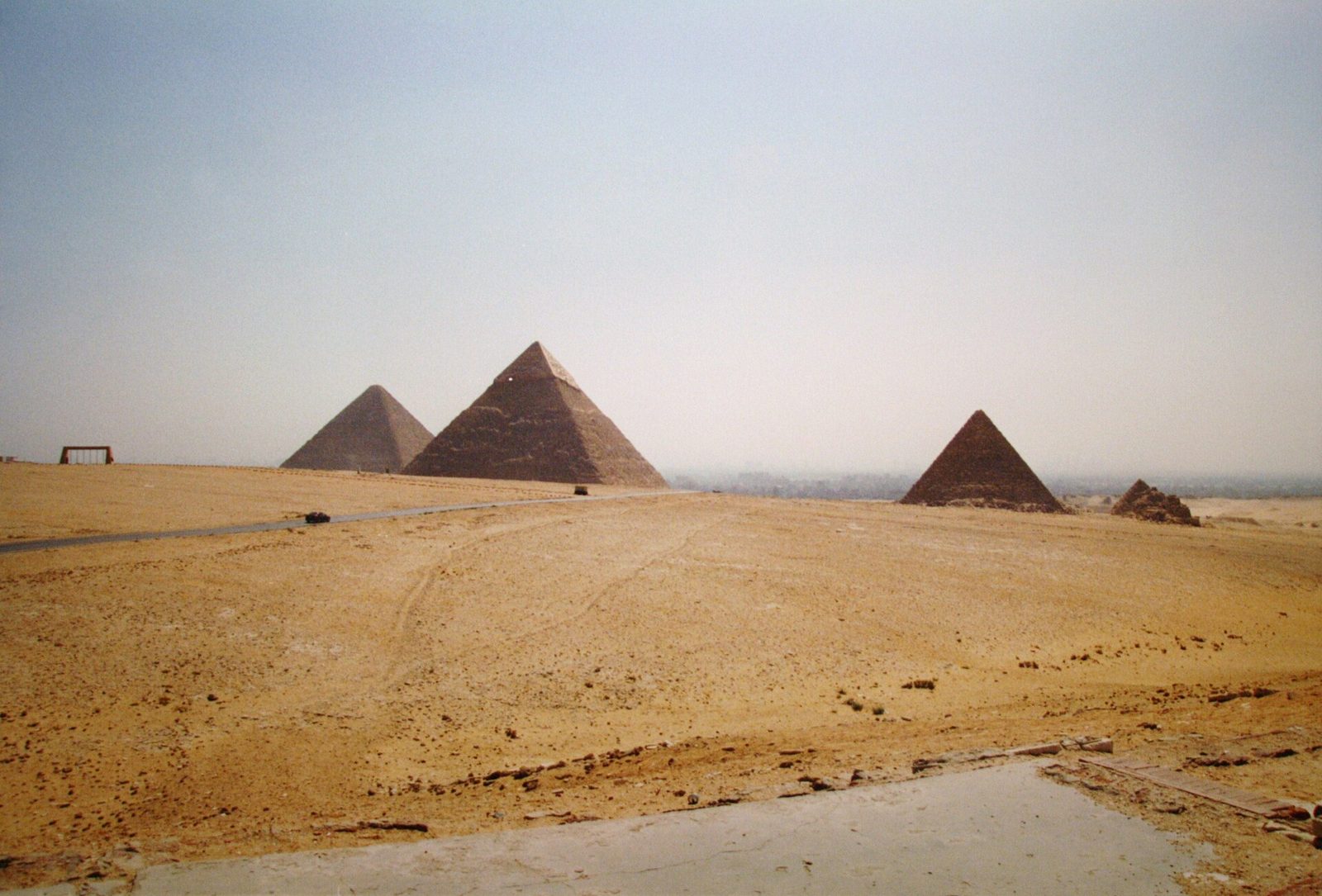
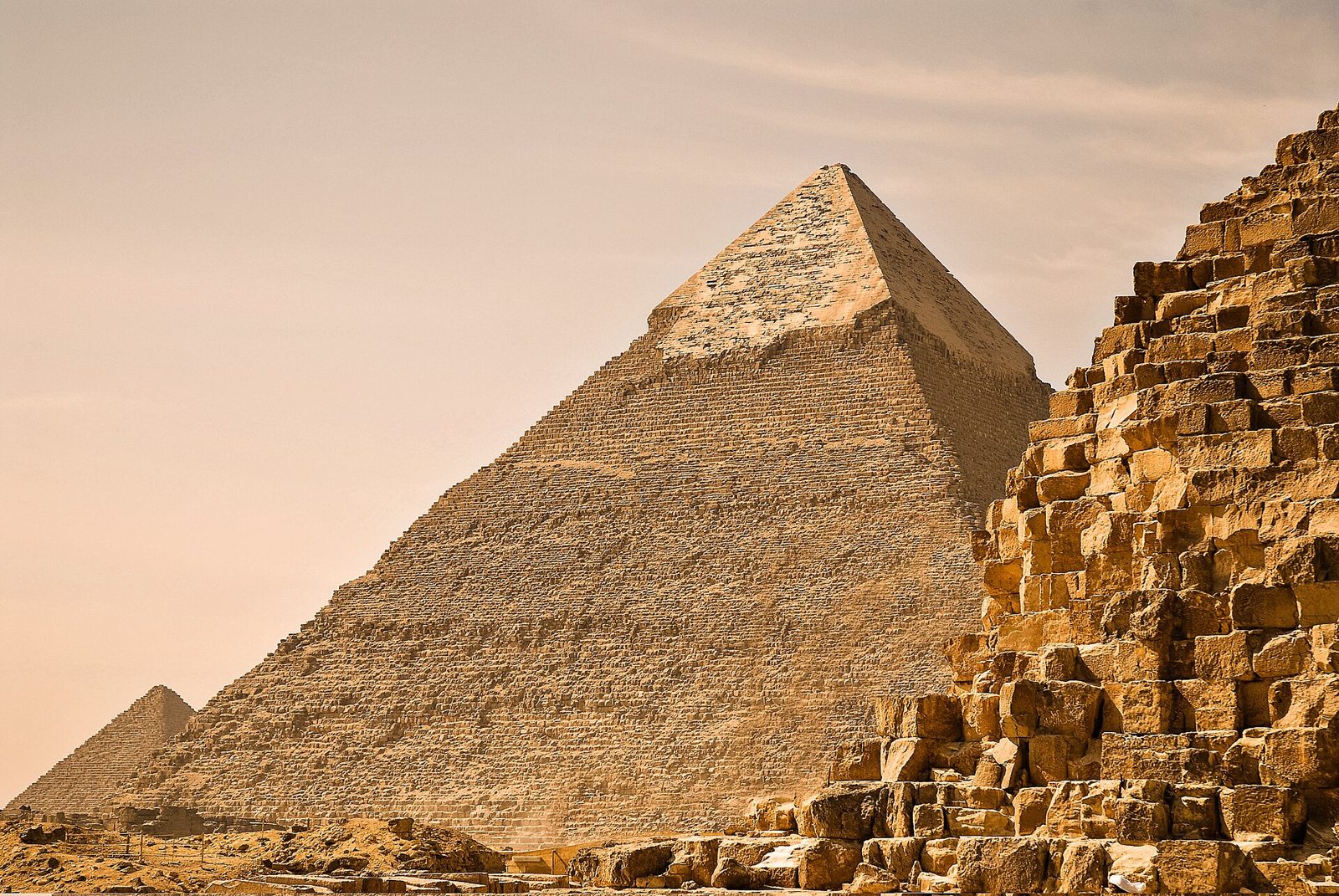
Khafre's pyramid, built almost as tall as Khufu's, still keeps its casing at the top; Menkaure's, the smallest, stands to the south.
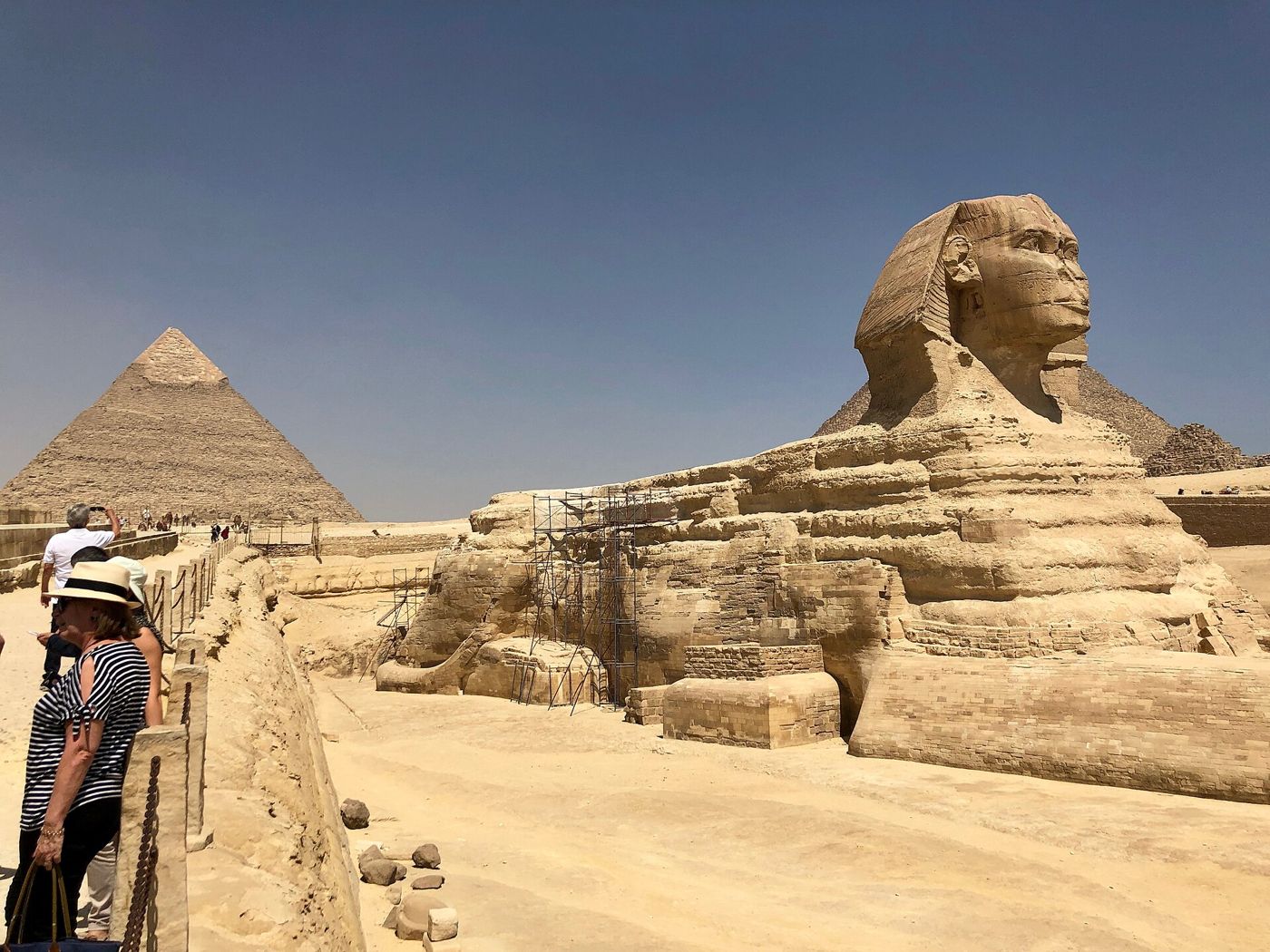
Carved from the plateau's limestone: a man's face on the body of a lying lion, about 240 feet (73 meters) long and 66 feet (20 meters) high.
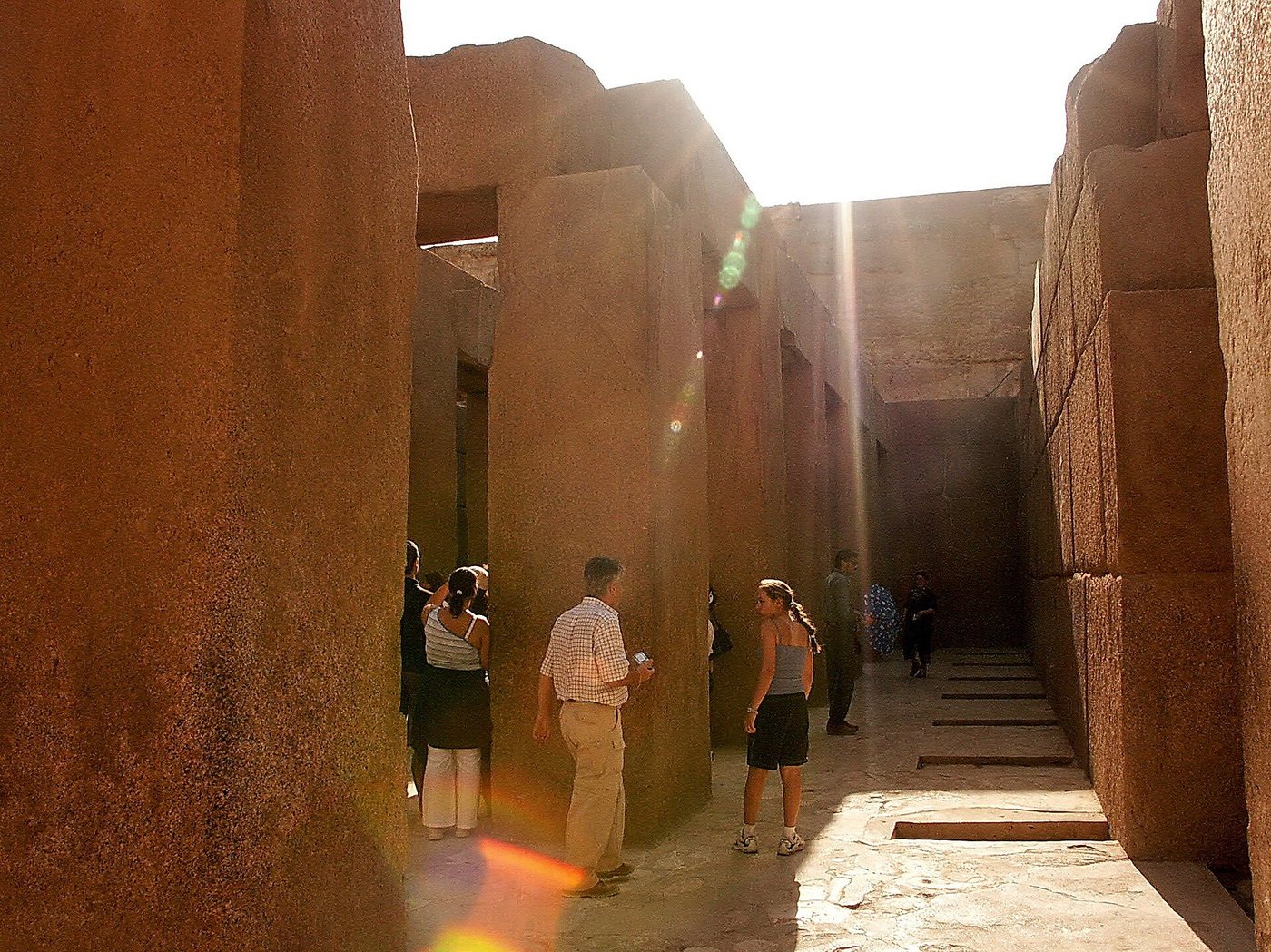
Part of King Khafre's funerary complex, beside the Sphinx, linked by a sloping causeway to his pyramid.
Each pyramid at Giza was the centerpiece of a group of buildings, not a monument on its own. A valley temple stood at the edge of the floodplain, a covered causeway climbed the escarpment, and a mortuary temple sat against the pyramid's east face, with the burial chamber inside or below the pyramid.
Offerings arrived by water, the king's body was carried up the causeway, and priests kept up his cult at the temples long after the burial. The shape itself belongs to the sun: the first light of the day touches the stone, and the monument fixes that moment in geometry.
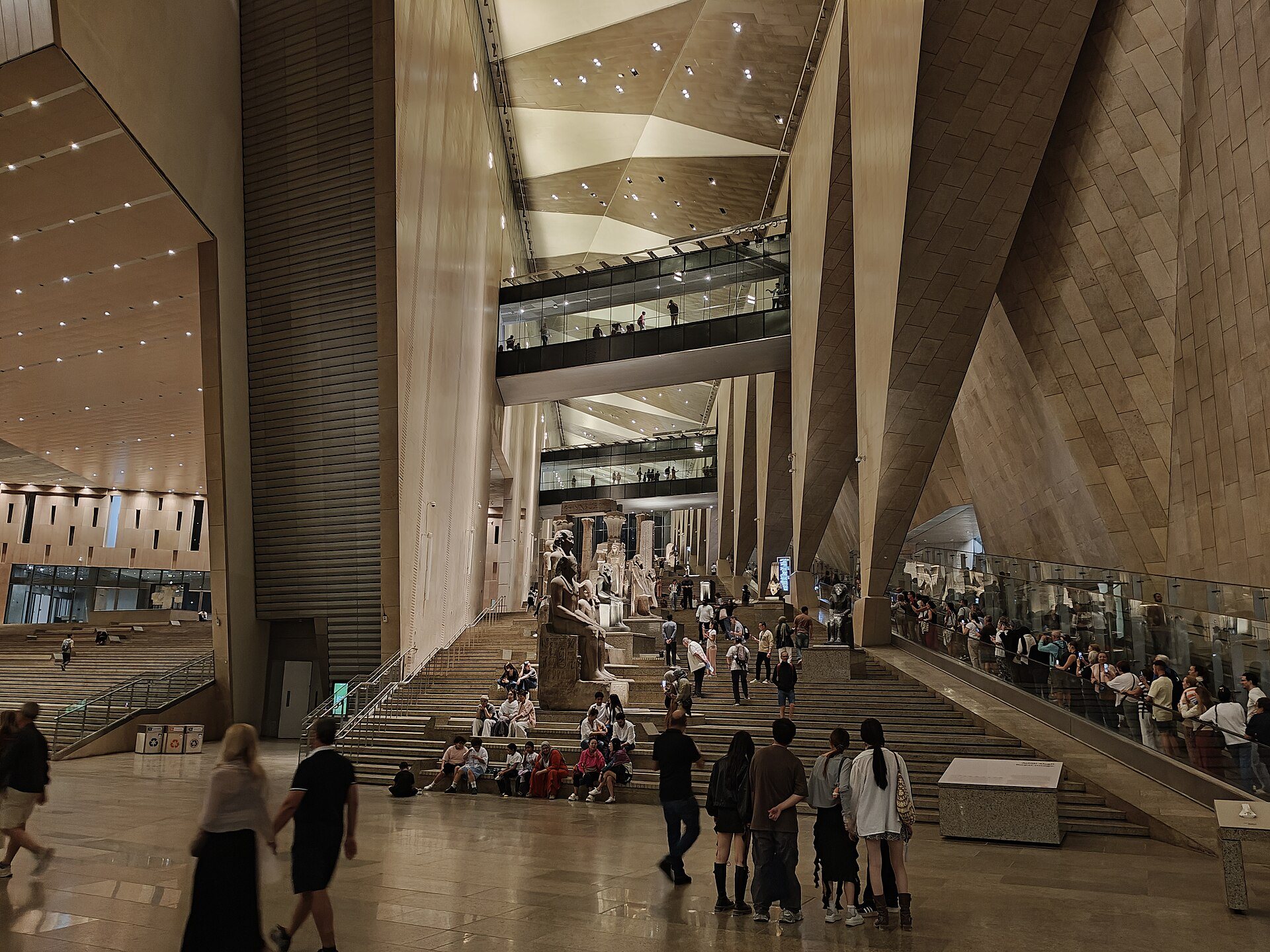
Around the kings' pyramids stand smaller queens' pyramids in rows, streets of mastaba tombs for officials, and boat pits cut into the rock beside the Great Pyramid. The best known of those boats, a cedar ship found dismantled in a sealed pit, is now displayed at the Grand Egyptian Museum.
Most of the stone was quarried on the plateau itself, while the fine casing and the inner chambers used limestone from Tura and granite brought from Aswan. The builders were organized Egyptian work crews, not slaves, housed and fed in a settlement excavated south of the Sphinx, with bakeries and a cemetery of their own.
Two of the pyramids show the work in close-up. Khafre's looks taller than his father's from most angles only because it stands on higher bedrock, and the cap of casing at its top is the clearest evidence of how all three looked when new. Menkaure's lower courses were cased in Aswan granite, and much of it was never dressed smooth, so you can see the work interrupted.
How the blocks were raised is still debated. Straight ramps, spiral ramps, internal ramps and lever systems each explain part of the evidence and fail at another part, so a single confident answer is a theory, not a settled fact.
October to April is the comfortable season. Within the day, the first hour after opening is cooler, emptier and better for photographs, and late afternoon puts warm light on the western faces; midday in summer, on open stone with no shade, is hard going.
Two to three hours covers the plateau at a reasonable pace: the three pyramids, the panorama point and the Sphinx. Allow extra time if you go inside a pyramid, and a full day if you add the Grand Egyptian Museum.
A road loops past the main viewpoints, and you can walk it, use the site buses, or ride a horse or camel. The line of all three pyramids is best from the panorama point in the desert beyond Menkaure's pyramid, and the terrace beside the Valley Temple lines the Sphinx up with Khafre's pyramid behind it.
The pyramid interiors that are open change from time to time. The passages are low, steep and hot and end in a bare chamber, since the Giza pyramids have no decorated walls inside; for some visitors that emptiness is the point, for others a disappointment, so decide before you buy the extra ticket.
Expect offers of camel rides, horse carriages, headscarves, scarabs and photographs that turn out not to be free. Decide in advance whether you want a ride, agree the full price and how long it lasts before you get on, and expect to be asked for a tip at the end.
Treat anyone who tells you a gate is closed or a site is shut with polite suspicion. The nuisance is commercial rather than criminal: a firm, friendly no usually ends it, and a licensed guide removes most of it.
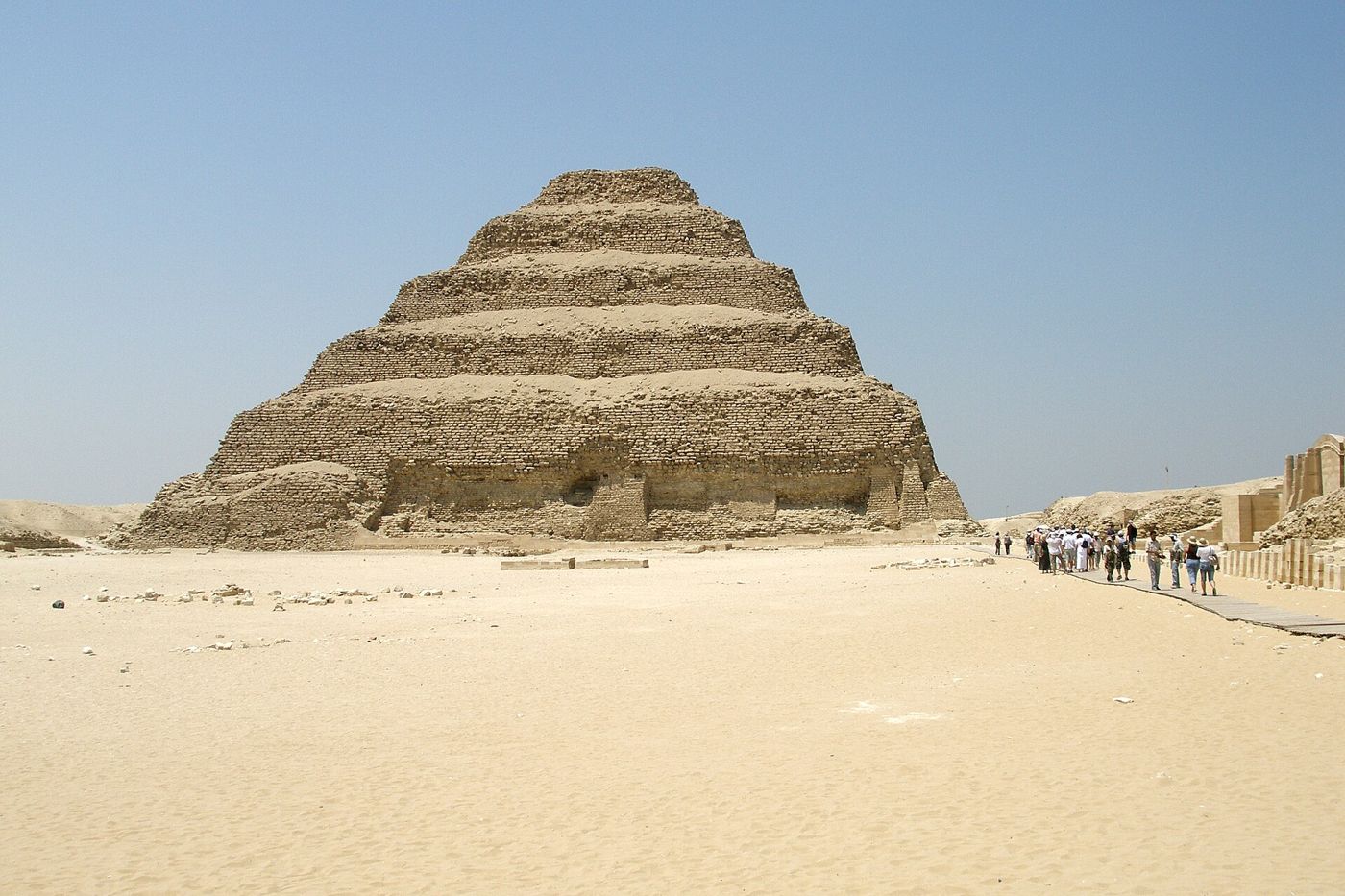
Many travelers combine the plateau with Saqqara and Memphis, which together show the pyramid idea beginning at Djoser's Step Pyramid and maturing at Giza. The other natural pairing is the Grand Egyptian Museum, where objects taken from these tombs are on display.
Giza works as the reference point for the rest of Egypt. Once you have stood at the base of Khufu's pyramid, Saqqara reads as the experiment that made it possible, and the temples of Luxor read as what came after.
| Summer | 7:00 am · last entry 4:00 pm |
|---|---|
| Winter | 7:00 am · last entry 4:00 pm |
| Ramadan | 8:00 am · last entry 3:30 pm |
The Ministry's monuments website gives 8:00 am to 4:00 pm daily.
Ministry of Tourism and Antiquities ticketing portal, checked August 2026
| Adult | Student | |
| Giza Plateau | EGP 700 | EGP 350 |
| Inside the Great Pyramid | EGP 1,000 | EGP 500 |
Prices in Egyptian pounds, as of August 2026
| From Downtown / Zamalek | 16.5 km · about 20 min |
|---|---|
| From Giza hotels | 1.8 km · about 4 min |
| From New Cairo | 45.3 km · about 42 min |
Without traffic, from our tours' map routing
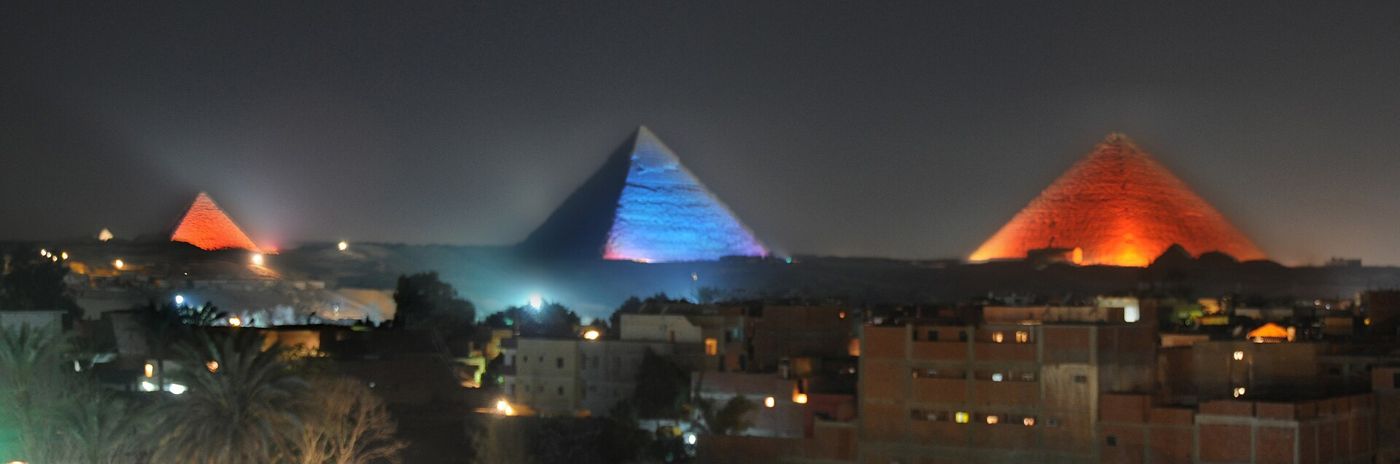
On our Cairo tours your guide takes you around the pyramids first, then down to the Sphinx and the Valley Temple, 0.7 km away. Entry to the plateau is included; going inside the Great Pyramid is an extra you can add. Some tours add a camel ride on the plateau, and in the evening the sound and light show tells the story of the pyramids in the voice of the Sphinx.
The coolest months are December to February.
World Meteorological Organization climate normals (monthly averages, not forecasts)
Guide only
Already have a car or a driver? Book a licensed guide for the Pyramids of Giza on your own plan, for a half day or a full day. The guide speaks English, Spanish, Portuguese, German, French or Italian. Entrance tickets are not included; a car and driver can be added on request.
They date from Egypt's 4th dynasty, about 2575 to 2465 BCE. The Great Pyramid, built for King Khufu, is the oldest of the three.
It was originally 481 feet (147 meters) high. Without most of its outer casing it now stands about 451 feet (138 meters).
Yes, with a separate ticket: EGP 1,000 for foreign adults and EGP 500 for students, as of August 2026. On our tours it is an optional extra.
From 7:00 am with last entry at 4:00 pm in summer and winter, and from 8:00 am with last entry at 3:30 pm in Ramadan, per the Ministry's ticketing portal.
EGP 700 for foreign adults and EGP 350 for foreign students, as of August 2026. Children under 6 enter free.
From Downtown or Zamalek the drive is 16.5 km, about 20 minutes without traffic; from New Cairo it is 45.3 km, about 42 minutes.
Organized Egyptian work crews, not slaves. Their settlement, with its bakeries and its own cemetery, was excavated south of the Sphinx.
It is linked with the complex of Khafre and lies beside his causeway and Valley Temple. The plateau ticket covers it.
Two to three hours for the plateau at a reasonable pace. Plan a full day if you add Saqqara and Memphis or the Grand Egyptian Museum.
They stand in Giza, on the west bank of the Nile, at the edge of the built-up area of greater Cairo.
No decoration: the Giza pyramids have no carved or painted walls inside. The passages are low, steep and hot and lead to a bare burial chamber.
Sources: UNESCO World Heritage Centre; Encyclopaedia Britannica; Egypt's Ministry of Tourism and Antiquities; World Meteorological Organization.
Day tours
Nearby
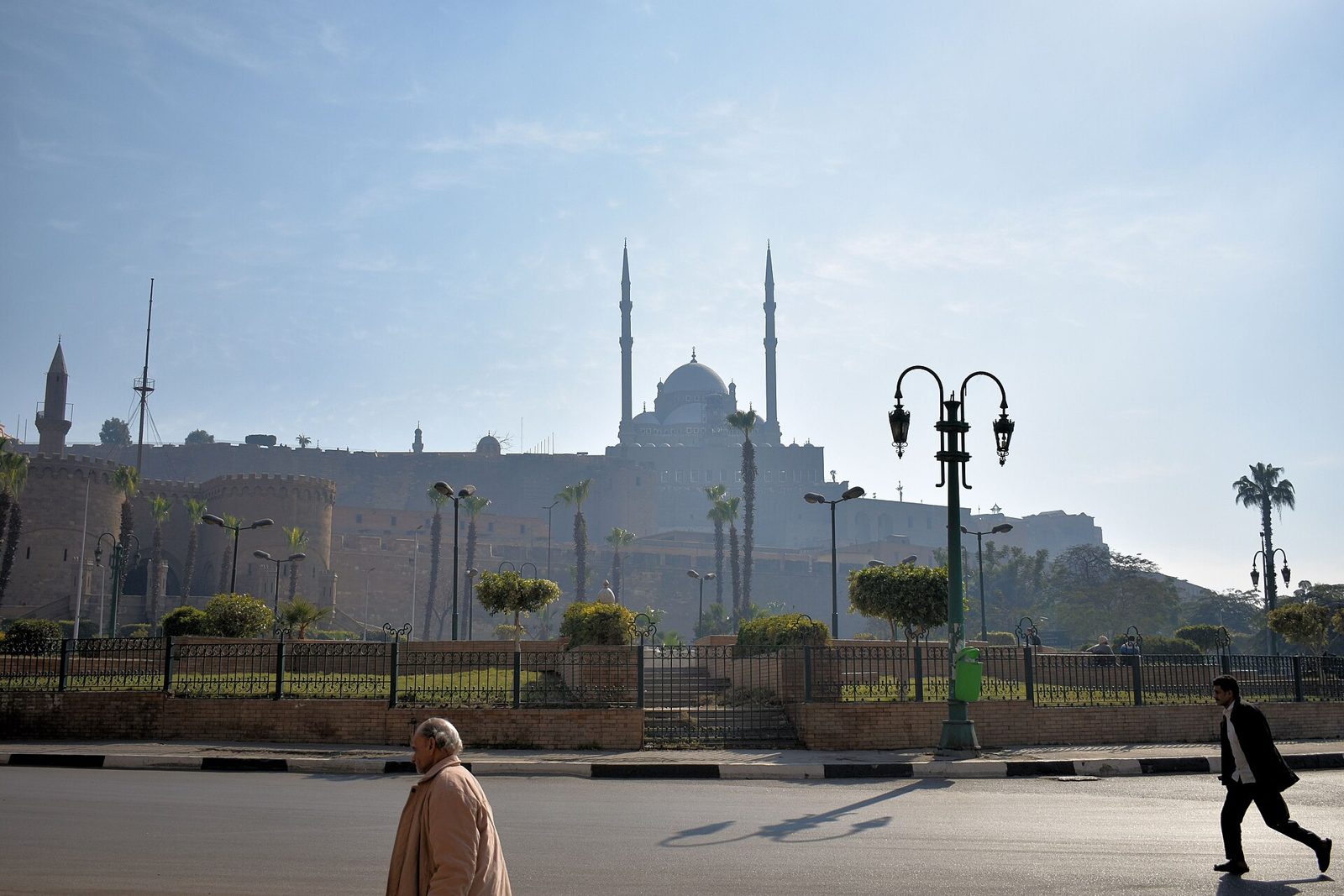 Muqattam Hills, Islamic CairoCairo CitadelSaladin's fortress on the Muqattam Hills and the Mosque of Muhammad Ali: history, hours, tickets.Opening hours: From 8:00 or 9:00 am, last entry 4:00 pmEntry ticket, foreign adult: EGP 550
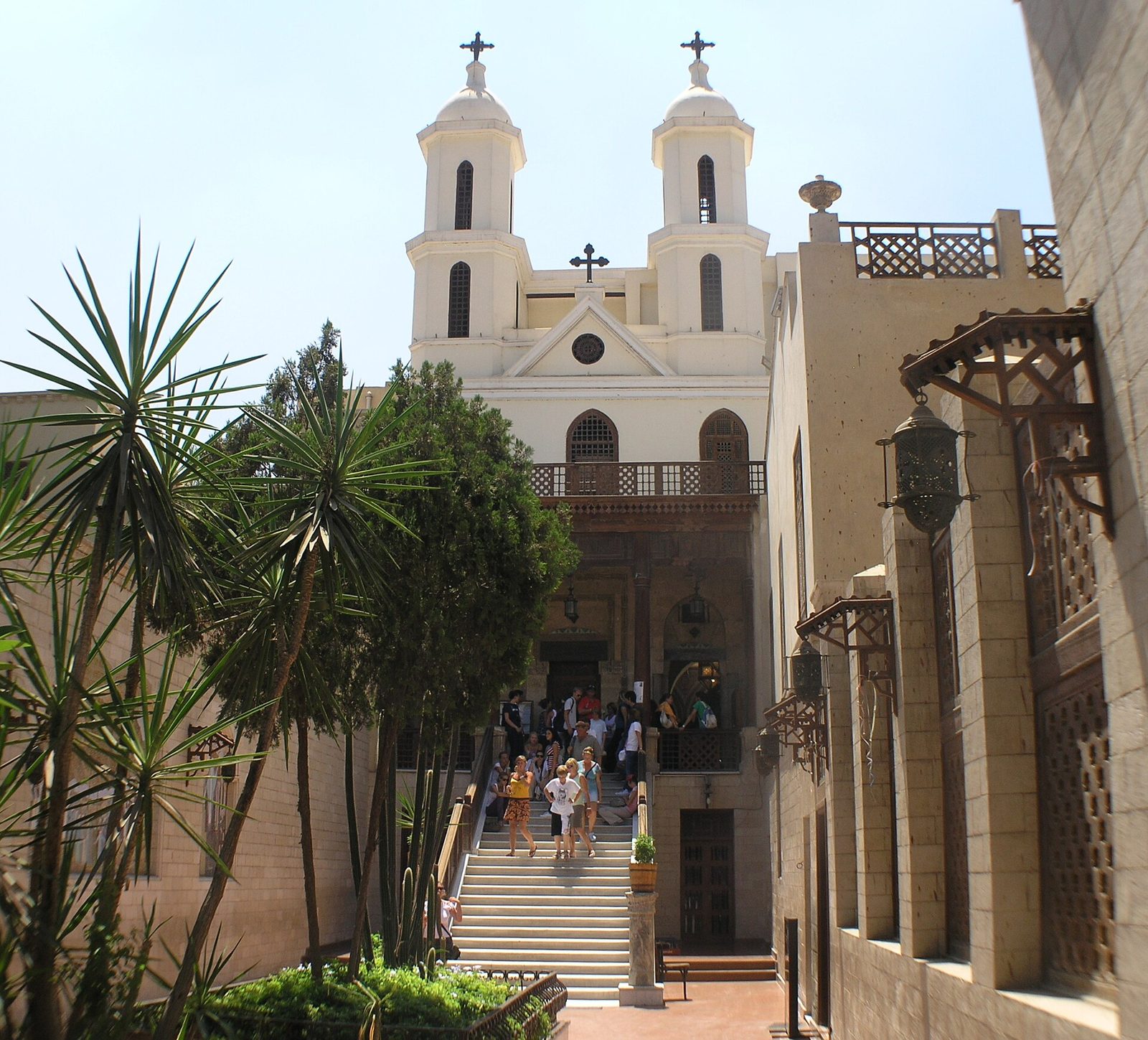 Old Cairo (Misr al-Qadimah), FustatCoptic CairoThe Hanging Church, Abu Serga and the Ben Ezra Synagogue in Old Cairo: history, hours, tickets.Coptic Museum hours: 9:00 am – last entry 4:00 pmCoptic Museum, foreign adult: EGP 280
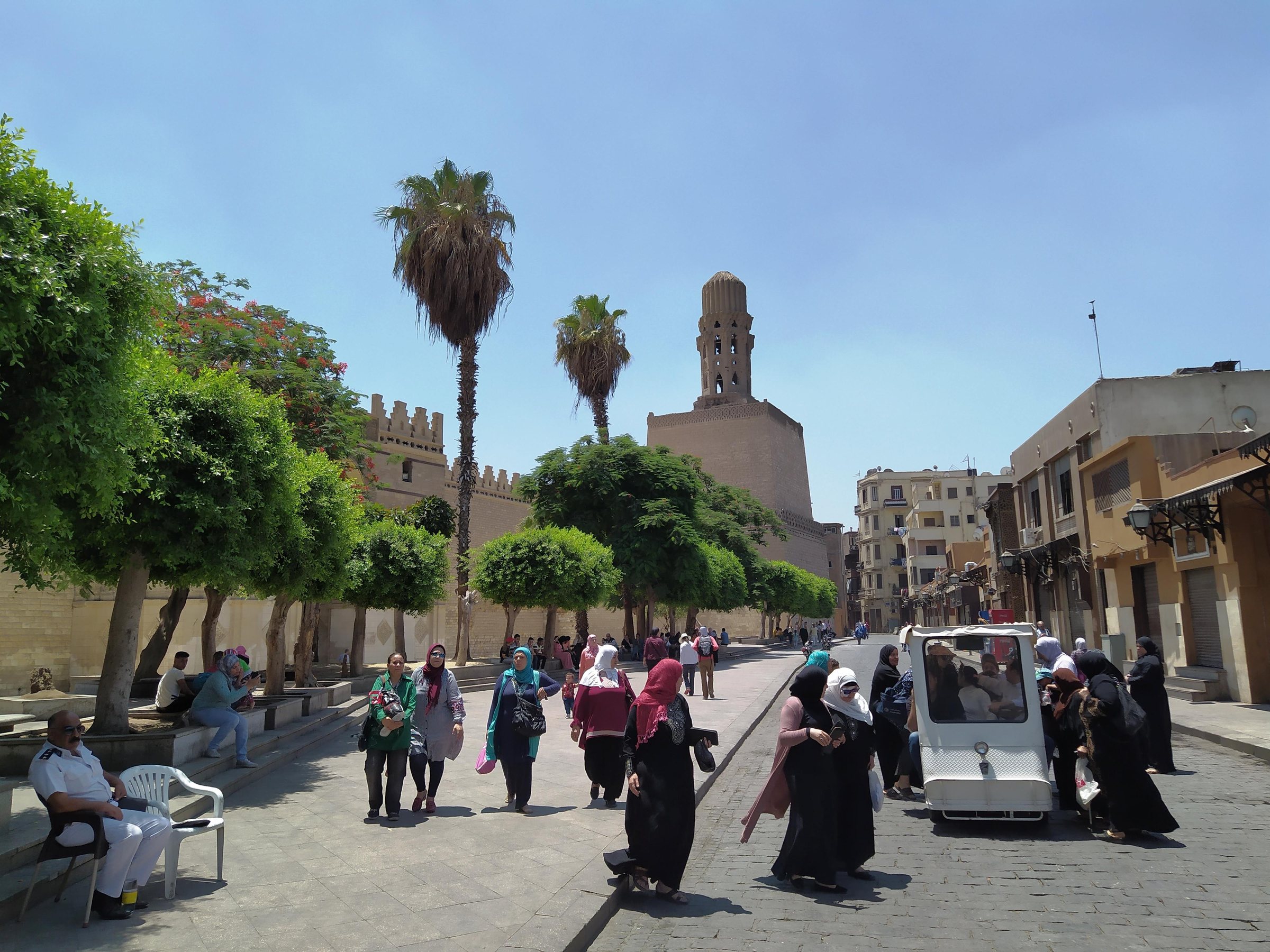 Fatimid Cairo, Gamaliya and al-Darb al-AhmarIslamic Cairo and Al-Muizz StreetThe Fatimid city of Cairo, from Bab al-Futuh to Bab Zuwayla: history, hours and tickets.Opening hours: 9:00 am – last entry 4:00 pmAl-Muizz ticket, foreign adult: EGP 220
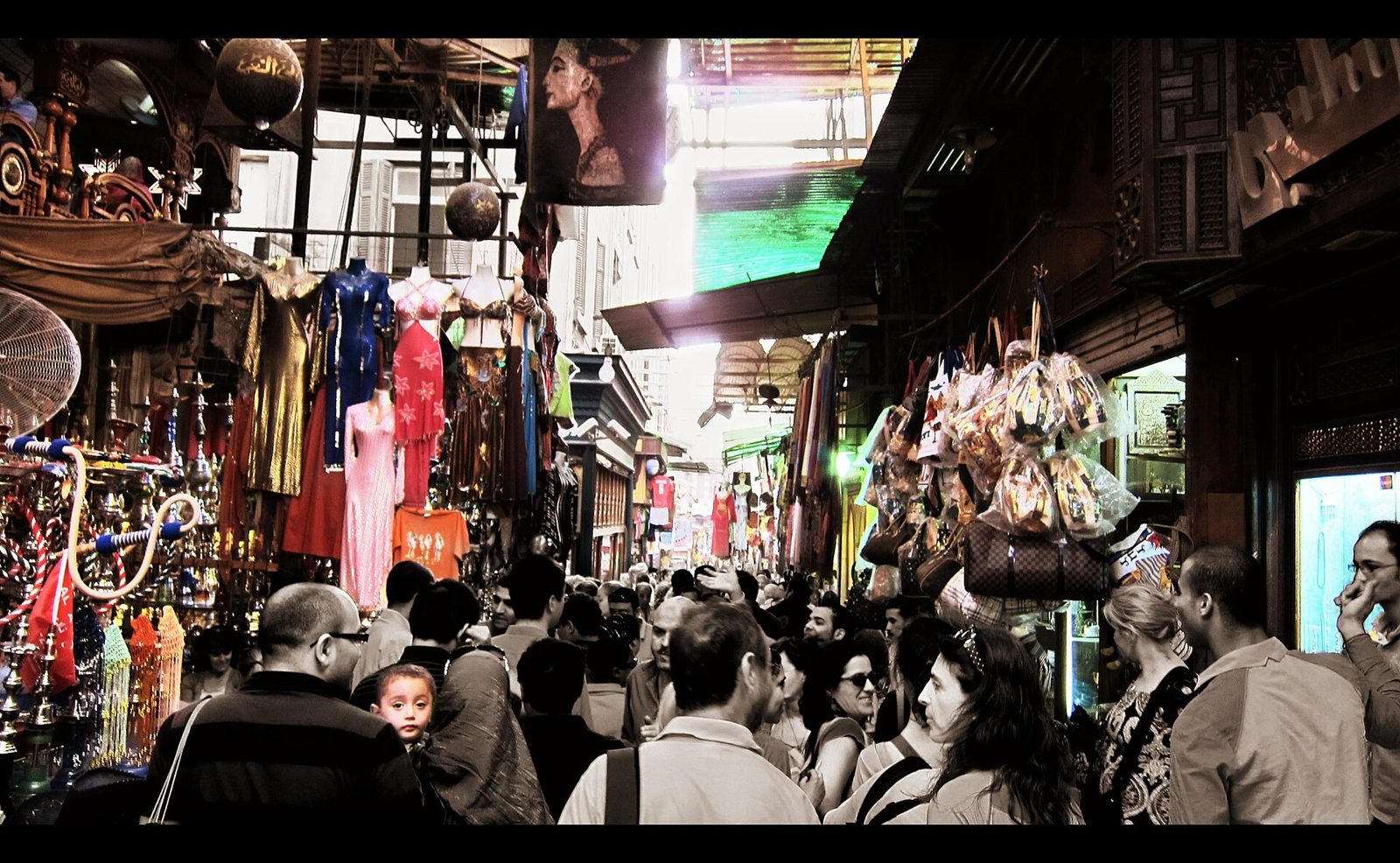 Old walled city, by al-Azhar MosqueKhan el-KhaliliCairo's old bazaar beside al-Azhar Mosque and Al-Muizz Street: history and what to see.
Guides
Best time of day to visit the Giza pyramidsOpening hours, the 4 p.m. cutoff, Ramadan hours, monthly temperatures and the evening show.Giza pyramids or Saqqara: which day trip first?Giza first, then Saqqara: what each site has, hours, tickets and the drive between them.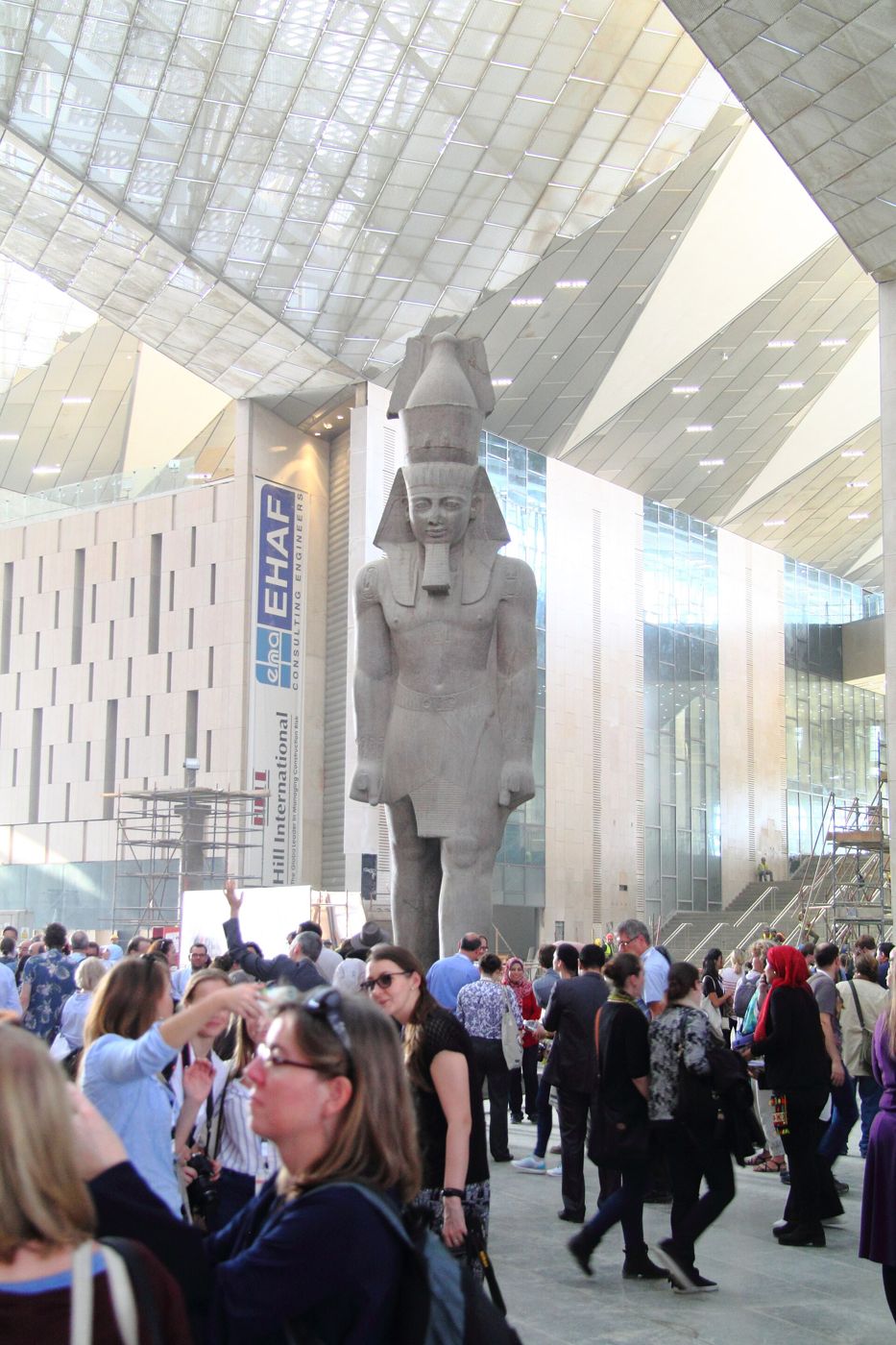 Egyptian Museum or Grand Egyptian Museum?Tutankhamun is at the GEM and the royal mummies at NMEC: what each Cairo museum holds and how to choose.First time in Egypt: which day tours to start withGiza and a museum in Cairo, both banks in Luxor, Philae in Aswan: where a first trip starts.