Cairo & Giza · Old Cairo (Misr al-Qadimah), Fustat
Coptic Cairo
The old Christian and Jewish quarter of Cairo, built in and around the Roman fortress of Babylon: the Hanging Church, Abu Serga and the Ben Ezra Synagogue.
Coptic Cairo is the quarter of the old churches in Old Cairo (Misr al-Qadimah), the district that grew from Al-Fustat, the first Islamic capital of Egypt, founded in 641 by 'Amr ibn al-'As. Its old churches stand on and around the walls of the Roman fortress of Babylon: the Hanging Church, built over two of the fortress towers, and the Church of Saints Sergius and Bacchus (Abu Serga). Beside them is the Ben Ezra Synagogue, the oldest synagogue in Egypt.
The quarter matters to Egypt's Christians and to its Jewish history alike. The Hanging Church was for centuries the seat of the Coptic Orthodox patriarch, and Abu Serga is linked to the Holy Family's journey through Egypt. Al-Fustat, with the Hanging Church and the Ben Ezra Synagogue, is part of Historic Cairo, inscribed by UNESCO in 1979.
Roman BabylonThe Roman fortress known as Babylon stood here; its walls still enclose the Coptic Museum and the old churches around it.
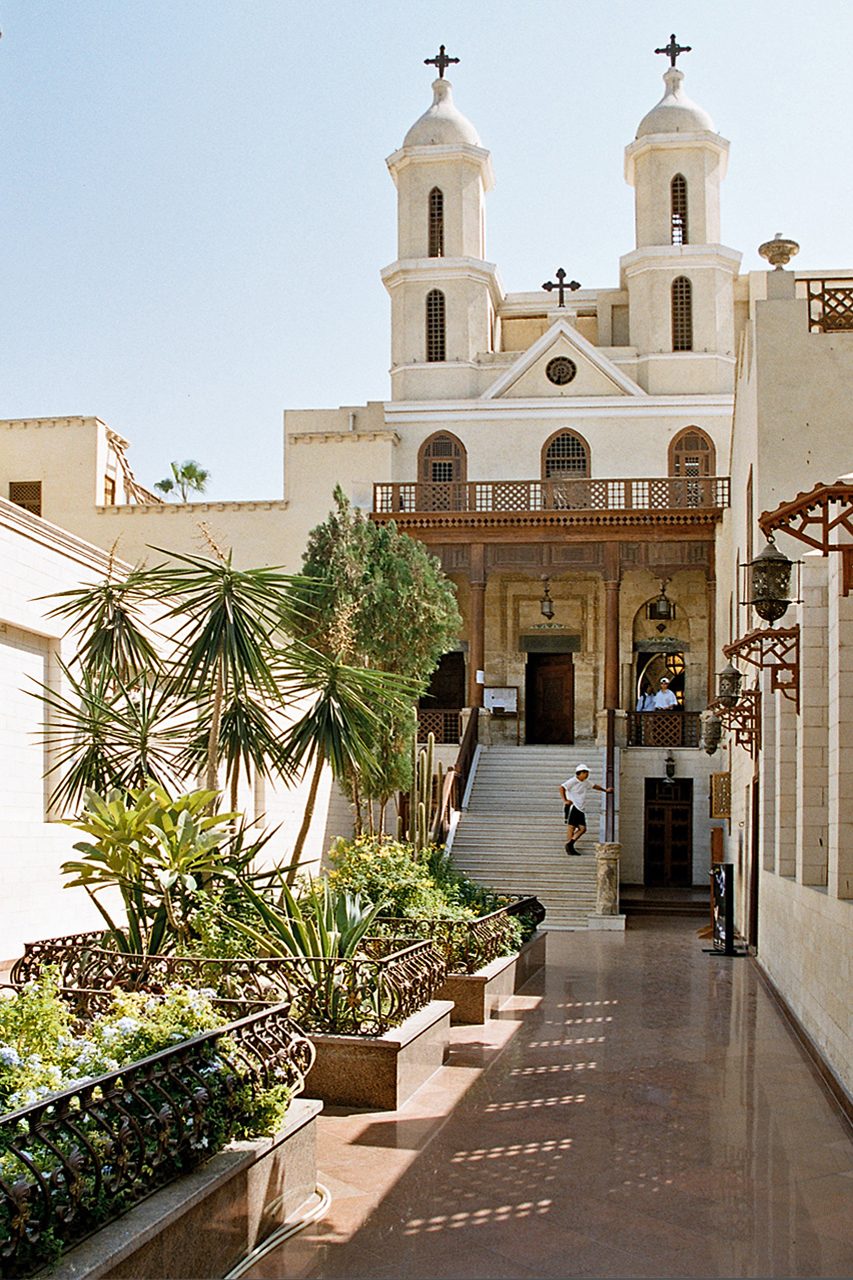
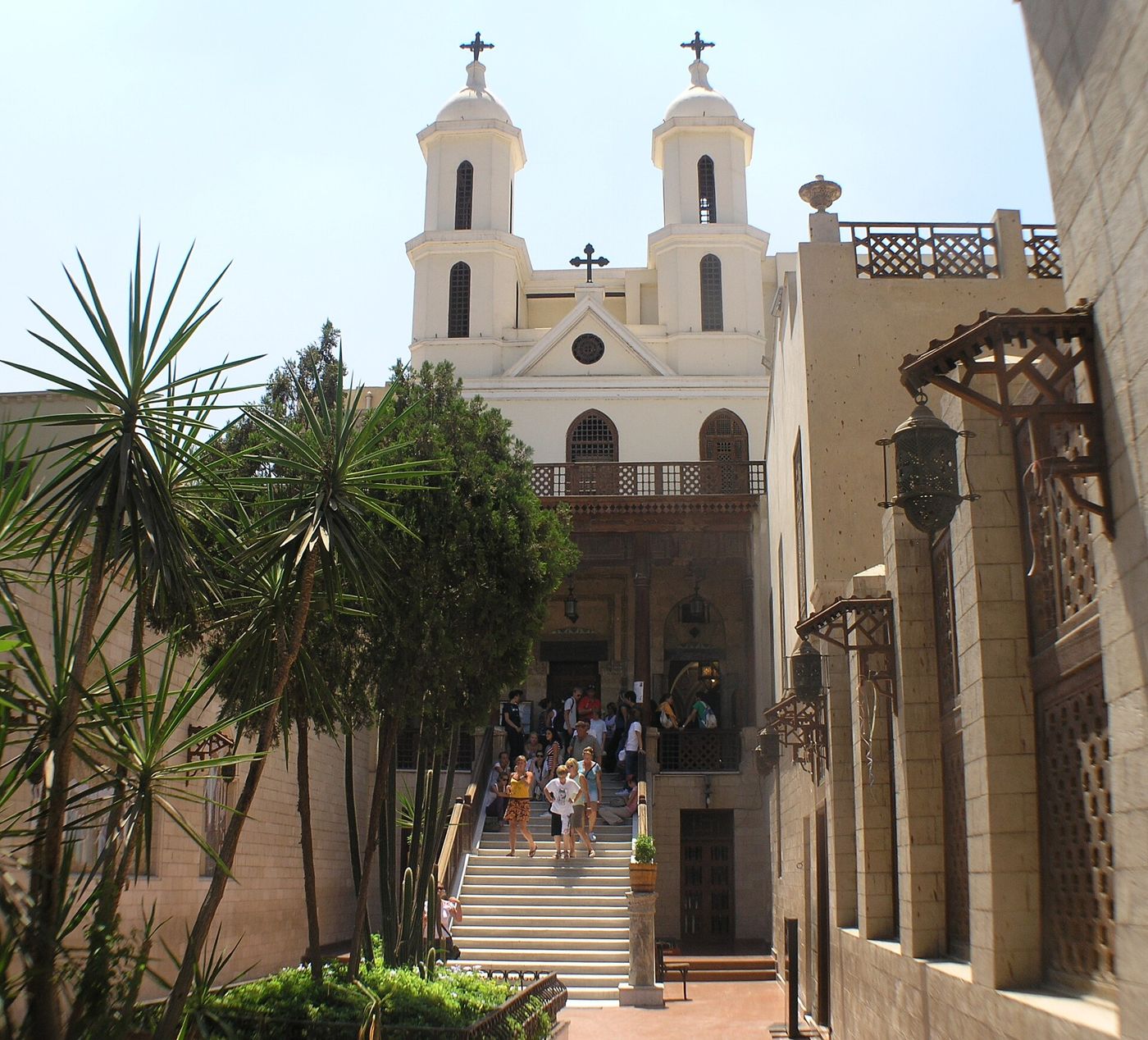
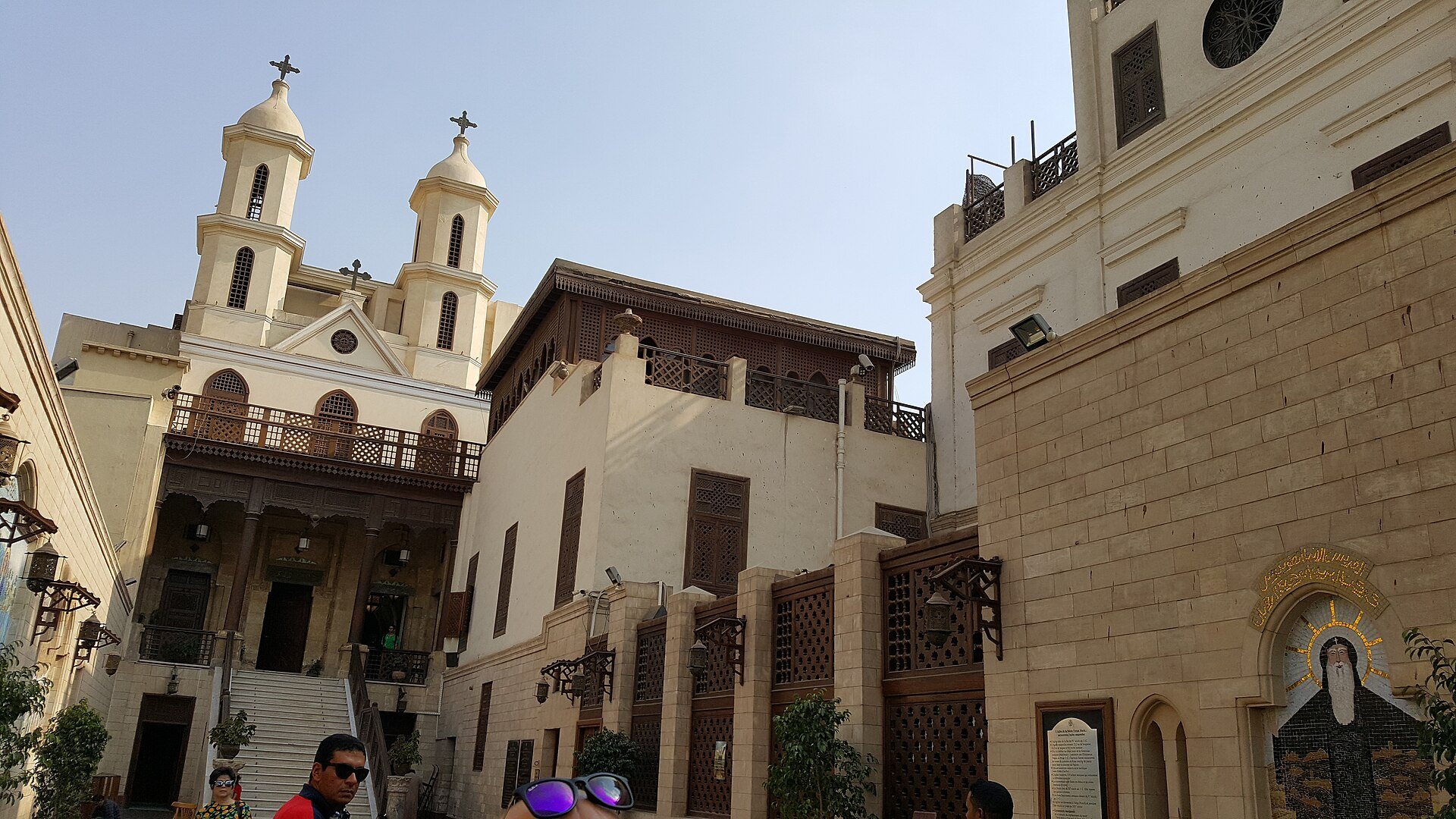
The Hanging ChurchBuilt towards the end of the fourth century between two towers of the fortress, raised 13 meters above the ground. In the Middle Ages it was also called the Church of the Stairs.
Al-FustatAfter the Arab conquest in 641 AD, 'Amr ibn al-'As founded Al-Fustat beside the fortress, making it Egypt's first Islamic capital.
Seat of the patriarchThe Coptic Orthodox Patriarchate had its headquarters in the Hanging Church from 1047 to 1320 AD.
The Cairo GenizaThe Ben Ezra Synagogue's storeroom kept documents gathered over 850 years. Europeans found them in 1888, and they are now in libraries around the world.
What you'll see
The Hanging Church
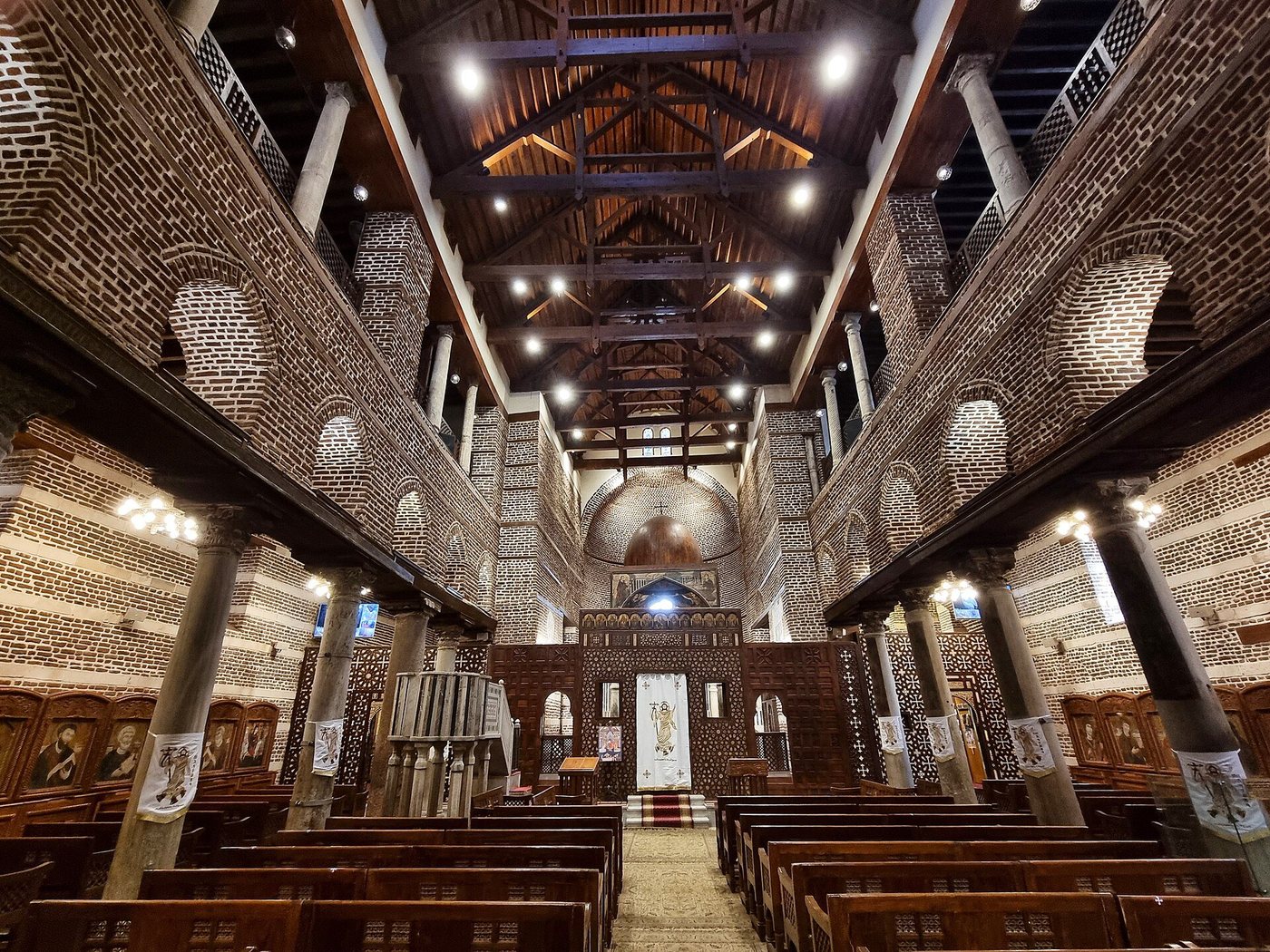
Stairs lead up to the church, which rests on the old fortress. Inside, three rows of marble columns divide it into four wings, the ceiling is shaped like Noah's Ark, and a marble pulpit from the eleventh century stands on ten columns.
Icons and carved screens
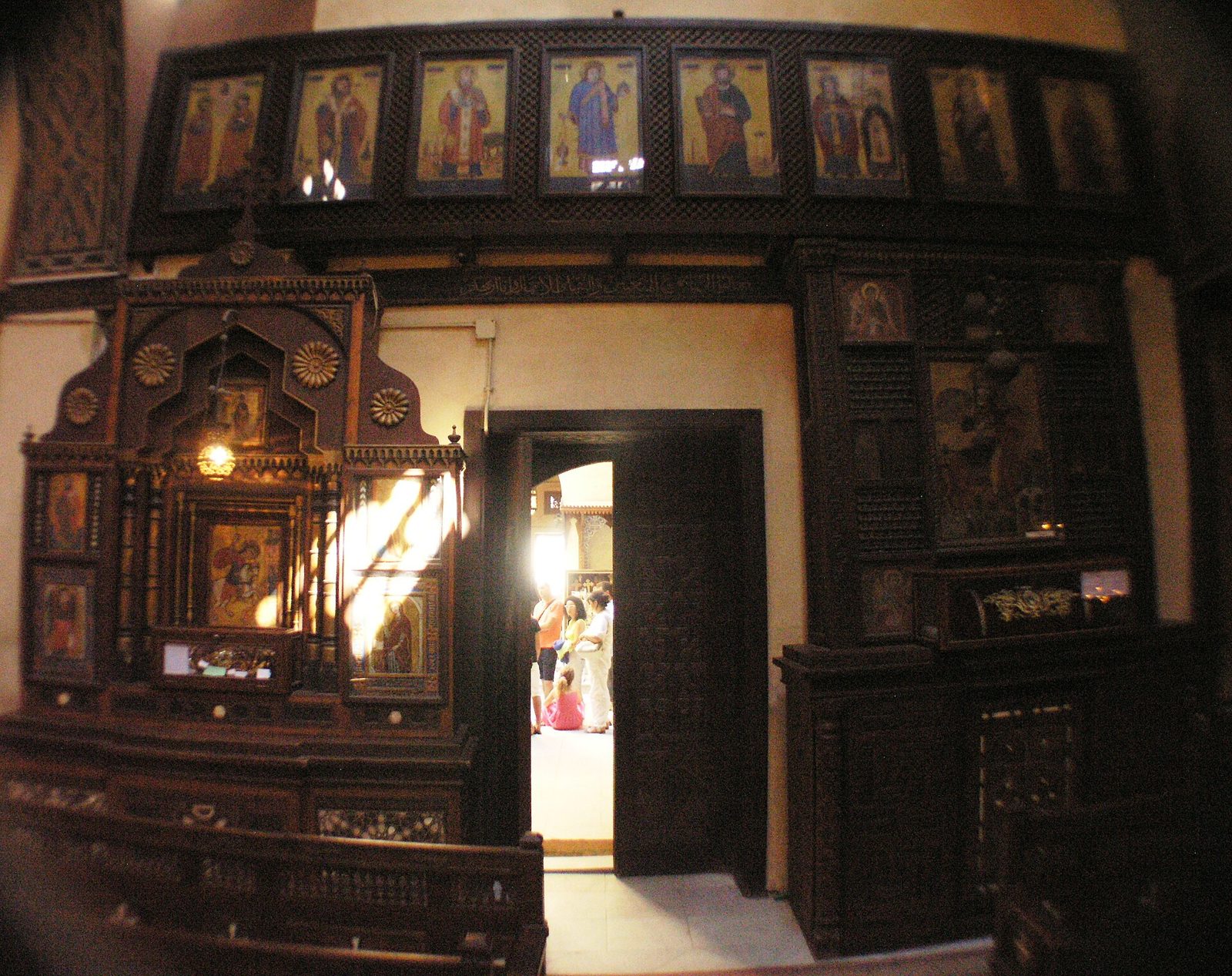
The Hanging Church is known for the icons on its walls: the oldest dates to the fifteenth century, most to the end of the eighteenth. Carved wooden screens hung with icons are found in the churches of the quarter.
Church of Saints Sergius and Bacchus (Abu Serga)
A basilica named after two early Christian martyrs, built on the Roman fort. The cave below its sanctuary is where, by tradition, the Holy Family sheltered in Egypt.
Ben Ezra Synagogue
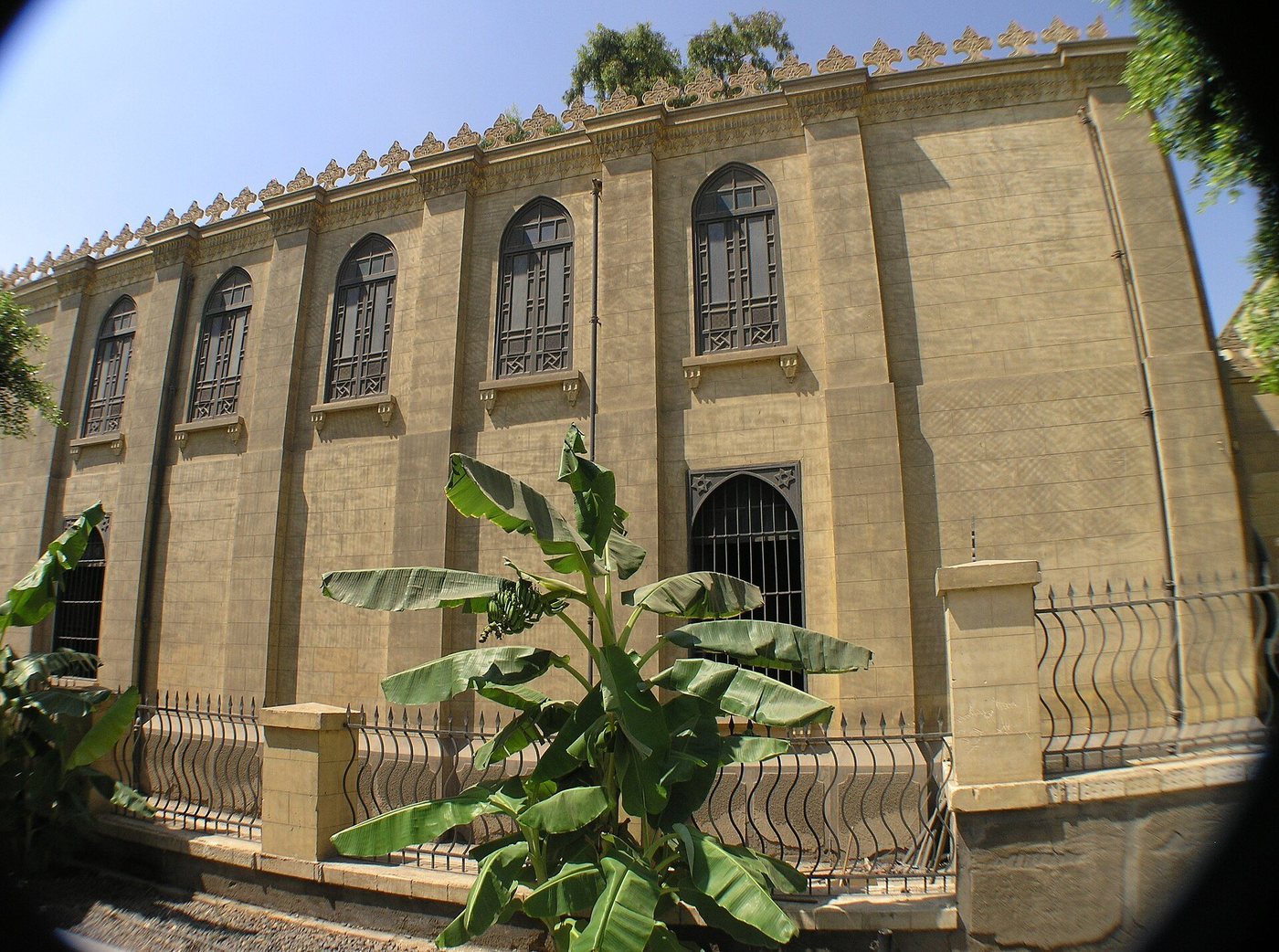
The oldest synagogue in Egypt, named after the scholar Abraham ibn Ezra and no longer used for worship. Its niche facing the direction of prayer is inlaid with mother-of-pearl and carries the Ten Commandments in Hebrew.
What Coptic means: the word, the language and the period
Coptic comes, through Arabic, from the Greek word for Egyptian, so it first meant simply Egyptian and only later came to mean Egypt's Christians and their language. Coptic is the last stage of the ancient Egyptian language, written in the Greek alphabet with extra letters taken from demotic, and the Coptic Orthodox Church still uses it in its liturgy.
The Coptic Museum covers the centuries between the last pharaonic temples and the first mosques, when Egypt was Christian and its art borrowed freely from pharaonic, Greek and Roman sources. In its galleries an acanthus leaf from a Greek capital turns into an Egyptian motif, and the ankh becomes the looped cross the Coptic Church still uses.
The Coptic Museum: its founding and its building
The museum was founded in the early twentieth century on the initiative of Marcus Simaika, a Coptic public figure who argued that Egypt's Christian heritage was being lost to neglect, sale and careless church renovation. With the patriarch's backing he gathered material from churches and monasteries and housed it inside the walls of the Roman fortress of Babylon, beside the Hanging Church.
The state later took the museum over and added a new wing, giving it two buildings around a garden. After an earthquake damaged the buildings, a long restoration gave it modern lighting, climate control and new labels.
The building is part of the collection. Both wings use salvage from demolished Coptic houses, including carved wooden ceilings, mashrabiya screens, marble floors and fountains, and the courtyard garden is one of the quietest spots in central Cairo.
What the Coptic Museum holds: stone, paintings, wood and textiles
The museum holds the largest collection of Coptic art in the world. Its stone galleries draw on two monasteries that were excavated and then dismantled, the monastery of Apollo at Bawit in Middle Egypt and the monastery of Jeremiah at Saqqara, so their reassembled apses and decorated niches survive nowhere else.
Painted niches are shown as complete units, the best known with Christ enthroned above the Virgin and the apostles; their flat, frontal figures show the language of the icon taking shape. The textiles, preserved in dry desert burials, are the collection specialists rate most highly, with colors that have lasted remarkably well.
Capitals, friezes, niches and funerary stelae from monastic sites
Carved wooden doors, screens and panels, whose turned-wood craft passed into Islamic mashrabiya
Tunics, shawls, curtains and tapestry-woven roundels in wool and linen
Icons, mostly from later centuries, with some earlier examples
Processional crosses, censers, lamps, chalices, glass, pottery and ivory
Combs, toys and amulets that bring everyday life into view
The Nag Hammadi codices and the Al-Mudil Psalter
The museum is home to the Nag Hammadi library, the papyrus codices found in Upper Egypt in the mid-twentieth century. Their Coptic texts, among them the Gospel of Thomas, reopened the modern study of early Christian diversity.
Its most important single book is a complete Coptic psalter found in a burial at Al-Mudil in Middle Egypt, still in its original leather binding. It was found where it had been placed, under the head of the person buried with it.
Manuscripts are fragile, so what is on show rotates and may be a facsimile. If one item is the reason for your visit, ask at the museum first.
Visiting the Coptic Museum together with the churches
The museum stands inside the walls of the Roman fortress of Babylon, where two massive round Roman towers flank the entrance area. From there the compound's narrow sunken lanes lead to the Hanging Church, Abu Serga, the Church of St. Barbara, the Greek Orthodox church of St. George and the Ben Ezra Synagogue, all within a handful of alleys.
Give the museum about an hour and a half and the churches and synagogue about as long again, and Coptic Cairo makes a full half day. Seeing the museum first helps, because its objects explain the icons, screens and carving you then meet in the churches.
Mar Girgis metro station is right outside the compound entrance. Expect security scanners at the entrance, cover shoulders and knees for the churches, and remember that Fridays and Sundays bring worshippers; Fustat and the Mosque of Amr ibn al-As lie immediately north, and the National Museum of Egyptian Civilization is close by in the same district.
Opening hours and tickets
Opening hours
Coptic Museum, summer and winter
9:00 am – last entry 4:00 pm
Coptic Museum, Ramadan
9:00 am – last entry 2:00 pm
Our facts cover the Coptic Museum only, not the churches or the synagogue. The Ministry's website gives the museum 9:00 am to 5:00 pm daily.
Ministry of Tourism and Antiquities ticketing portal, checked August 2026
Tickets, foreign visitors
Adult
Student
Coptic Museum
EGP 280
EGP 140
Children under 6 enter free
Students: valid ID, age 24 or under
We hold no checked prices for the churches or the synagogue
Our tour's stops are the Hanging Church, Abu Serga and the Ben Ezra Synagogue; the Coptic Museum is not on the program
Prices in Egyptian pounds, as of August 2026
Getting there and how the visit runs
Drive to the site
Downtown / Zamalek hotels
6.3 km · about 6 min
Giza hotels, near the pyramids
15.3 km · about 16 min
New Cairo hotels
32.1 km · about 32 min
Without traffic, from our tours' map routing
Coptic Cairo is the last stop on our Egyptian Museum, Citadel and Coptic Cairo day, 6.8 km from the Citadel, about 9 minutes without traffic. Your guide walks you through the Hanging Church, the Church of St. Sergius and the Ben Ezra Synagogue, which stand close together in the old quarter. The distances above are the drives back to your hotel at the end of the day.
Before you go
What to wear and bring
Modest clothing, as in any place of worship
Comfortable shoes for stairs and old stone lanes
Photos
Photos with a mobile phone are free of charge
Ask before photographing people
Average daily high in Cairo (°C)
19°J
20.3°F
23.4°M
28.2°A
31.9°M
34.6°J
34.8°J
34.5°A
33.1°S
29.7°O
24.7°N
20.4°D
The coolest months are December to February.
World Meteorological Organization climate normals (monthly averages, not forecasts)
Guide only
Just need a guide at Coptic Cairo?
Already have a car or a driver? Book a licensed guide for Coptic Cairo on your own plan, for a half day or a full day. The guide speaks English, Spanish, Portuguese, German, French or Italian. Entrance tickets are not included; a car and driver can be added on request.
Because it was built between two towers of the Roman fortress of Babylon, so that it rests about 13 meters above the ground.
How old is the Hanging Church?
The Ministry of Tourism and Antiquities dates it to the end of the fourth century. It became the seat of the Coptic patriarch in the eleventh century.
Where did the Holy Family shelter in Coptic Cairo?
In the cave under the Church of Saints Sergius and Bacchus, known as Abu Serga, which is linked to the Holy Family's journey through Egypt.
What is the Ben Ezra Synagogue?
The oldest synagogue in Egypt, no longer in use for worship. Its storeroom held the Cairo Geniza, documents gathered over 850 years and found by Europeans in 1888.
Do you need a ticket for Coptic Cairo?
The Coptic Museum charges EGP 280 for foreign adults and EGP 140 for students, as of August 2026. We hold no checked price for the churches or the synagogue.
Is Coptic Cairo a UNESCO World Heritage site?
Yes. Al-Fustat, with the Hanging Church and the Ben Ezra Synagogue, is part of Historic Cairo, inscribed in 1979.
What is in the Coptic Museum?
The world's largest collection of Coptic art: stonework and wall paintings from monasteries, carved woodwork, late-antique textiles, icons, metalwork, glass and pottery, and a major manuscript library.
What does Coptic mean?
It comes from the Greek word for Egyptian. It first meant simply Egyptian and came to mean Egypt's Christians, their church and their language, the last stage of ancient Egyptian written in Greek letters.
Where are the Nag Hammadi codices kept?
In the Coptic Museum in Old Cairo. What is on display rotates for conservation, so ask at the museum if you hope to see them.
Is the Coptic Museum worth visiting?
Yes, especially if you are interested in how Egypt moved from pharaonic religion to the medieval world, or in textiles, icons and early Christianity. It is also calm and shaded, a welcome break in Cairo.
Can you reach Coptic Cairo by metro?
Yes. Mar Girgis station is directly outside the compound entrance, and taxis and ride-hailing cars drop passengers at the same place.
Sources: Egypt's Ministry of Tourism and Antiquities; UNESCO World Heritage Centre; Encyclopaedia Britannica; World Meteorological Organization.