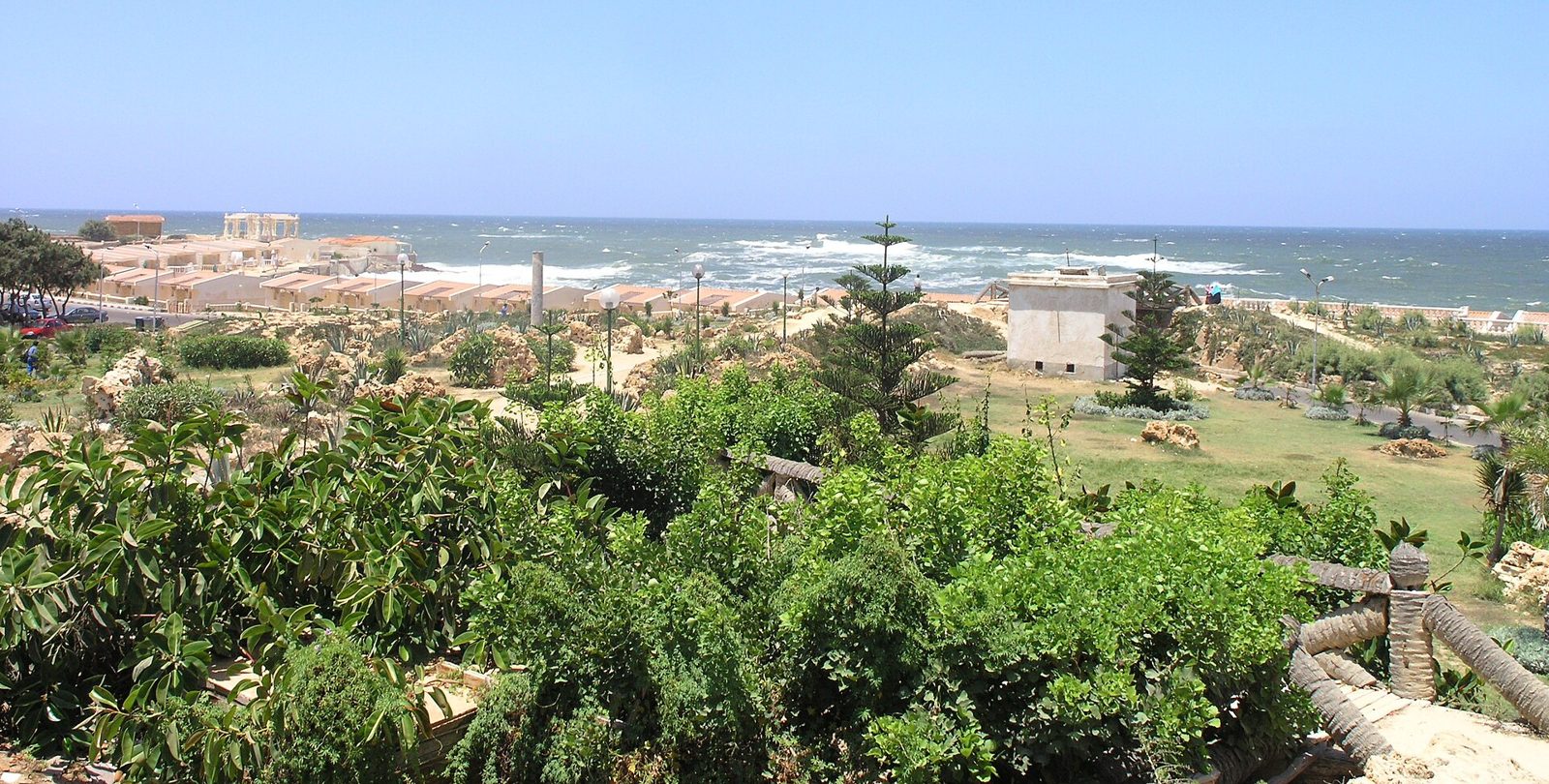
- Marsa Matruh is a Mediterranean beach town west of Alexandria, popular with Egyptian families in summer.
- The town bay is calm, shallow and clear; Cleopatra Beach is for looking at, not swimming.
- The town is strongly seasonal: busy in July and August, quiet and largely closed in winter.
- It is the usual starting point for the desert road south to Siwa Oasis.
- We do not run tours in Marsa Matruh; our nearest day tours start in Alexandria.
Marsa Matruh has some of the finest beaches in Egypt and almost no foreign visitors. The water in the town bay is a pale turquoise, the sand is white, and the whole bay is sheltered behind a rock ridge that keeps the open Mediterranean out. It lies west of Alexandria on the coast road toward Libya, and it is the gateway to Siwa Oasis.
There is one thing to understand before planning a trip: this is a strongly seasonal Egyptian holiday town. In July and August it is full of families from Cairo and the Delta, and in January it is largely shut. This guide covers the setting, the beaches, the seasons, transport, where to stay and what else is within reach. One note first: we do not run tours in Marsa Matruh.
Where It Is and Why People Go
The Setting
A wide, shallow lagoon is enclosed by a long limestone spur, with the town along its southern shore and a corniche facing the water. Because the ridge breaks the swell, the bay stays calm and very clear, and the sand is fine and pale, which is what produces the color.
A Different Coast
This is not the Red Sea and not the Nile. There are no reefs, no temples and no pyramids. What there is instead is Mediterranean coastline with cliffs, coves and shallow bays running a long way in both directions, much of it undeveloped and some of it now built up with large resort compounds.
Who Goes There
Egyptians, overwhelmingly. Marsa Matruh is one of the country's main domestic summer destinations, and that shapes everything: the season, the food, the atmosphere and the fact that beaches are busy with families rather than sunbathers.
A Little History
The town stands on an ancient port, known in Greek and Roman times as a harbor on the coastal route west. During the Second World War it was close to the front line of the North African campaign, and a cave above the bay linked to the German commander Rommel is now a small museum, the most unusual thing to see in town.
The Beaches
In Town
The main town beaches along the corniche are calm, shallow and busy, with loungers, umbrellas and cafés in season. They are the easiest swimming, which is why families use them, and they are within walking distance of most hotels.
Cleopatra Beach
A rock formation west of town has a natural pool among the stones, named for a legend that Cleopatra swam here. The legend is a legend. The spot is spectacular to look at and genuinely hazardous to swim in, because surge pushes through the rocks, and people have got into serious trouble there. Go for the photographs, not for a swim.
Agiba
Further west, Agiba is a small cove below a cliff reached by a flight of steps, with turquoise water against pale rock. It is the most photographed beach in the region and it deserves it. The steps are steep, the beach is tiny, currents can be strong and supervision is not guaranteed outside the season.
The Other Named Beaches
Rommel Beach, below the cave museum, is sheltered and calm. Obayyad, further west, has a long stretch of pale sand. Gharam, Al Awam and several smaller coves along the ridge each have their following among regular visitors.
East Toward Sidi Abdel Rahman
East along the coast, around Sidi Abdel Rahman and Almaza Bay, is the upmarket end of the coast, with large resorts and very clear water. These are self-contained developments rather than places with their own life.
A Warning About Access
Beach access on this coast changes. Stretches that were open have been enclosed within resort compounds, some beaches charge for entry or parking, services and lifeguards operate only in the summer months, and the authorities close beaches in rough weather. Check locally on the day rather than relying on a list, and treat any beach without visible supervision as unsupervised.