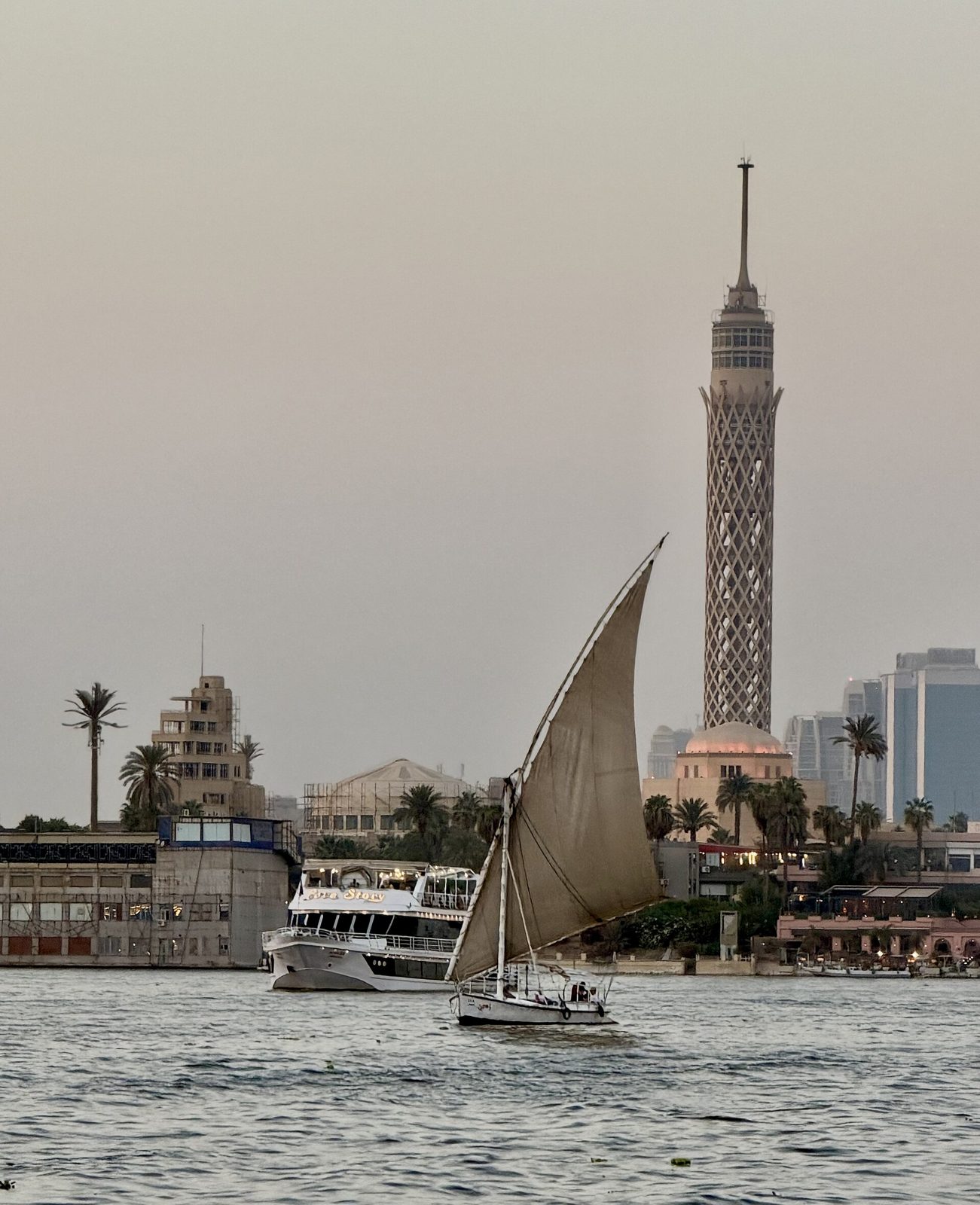
- The Cairo Tower is a concrete lattice tower on Gezira Island, designed by the Egyptian architect Naoum Shebib.
- Its open-air deck shows the Nile, downtown, the Citadel, the medieval minarets and, on clear days, the pyramids.
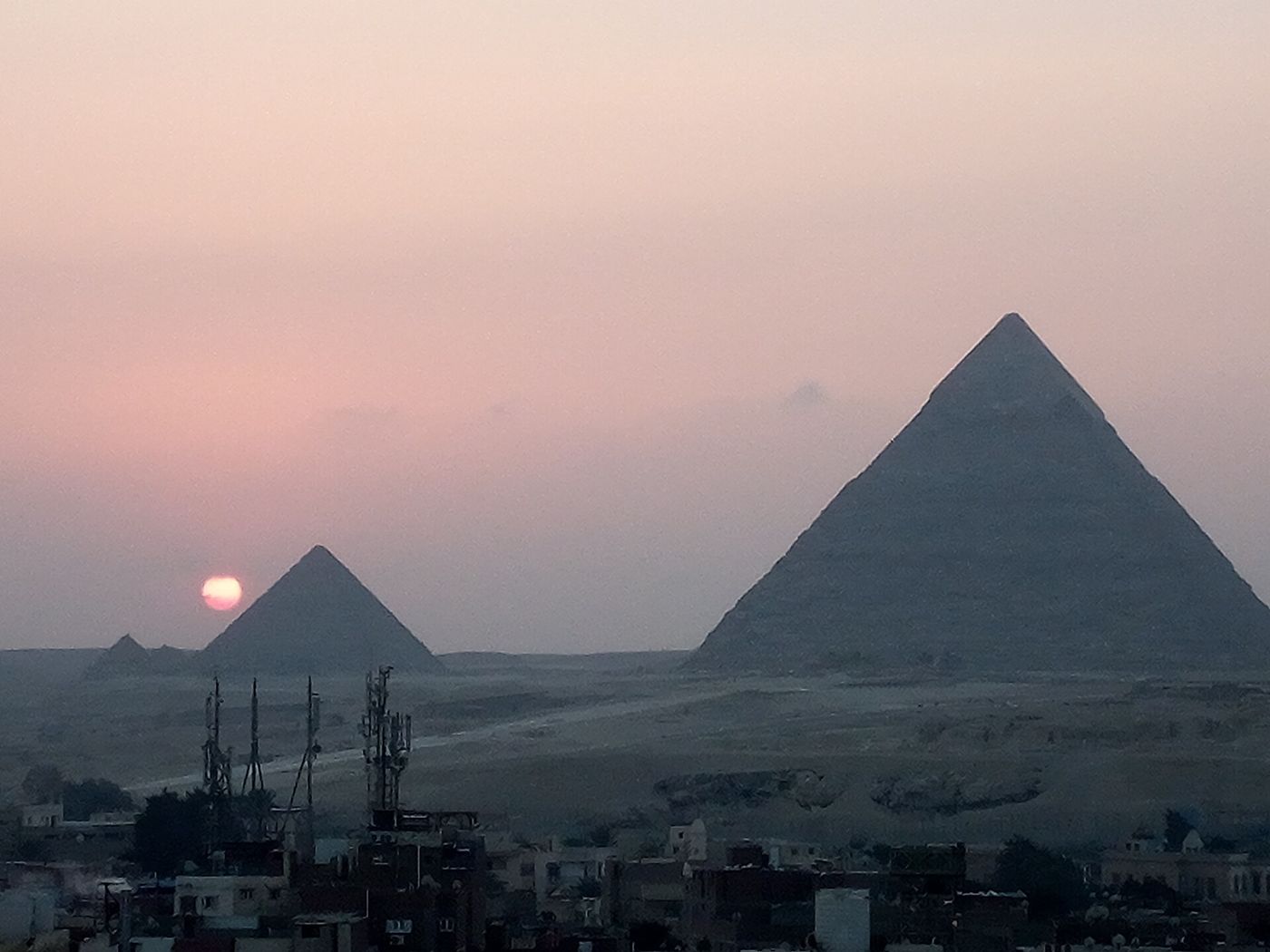
- Haze often hides the pyramids, so treat that view as a bonus rather than the reason to go.
- Go about an hour before sunset to see the city by day, at sunset and lit up at night in one visit.
The Cairo Tower is the slender concrete lattice standing on Gezira Island, visible from almost everywhere in central Cairo and from the Nile bridges in both directions. It does one job extremely well: it gets you high enough above one of the world's largest cities to finally understand its shape.
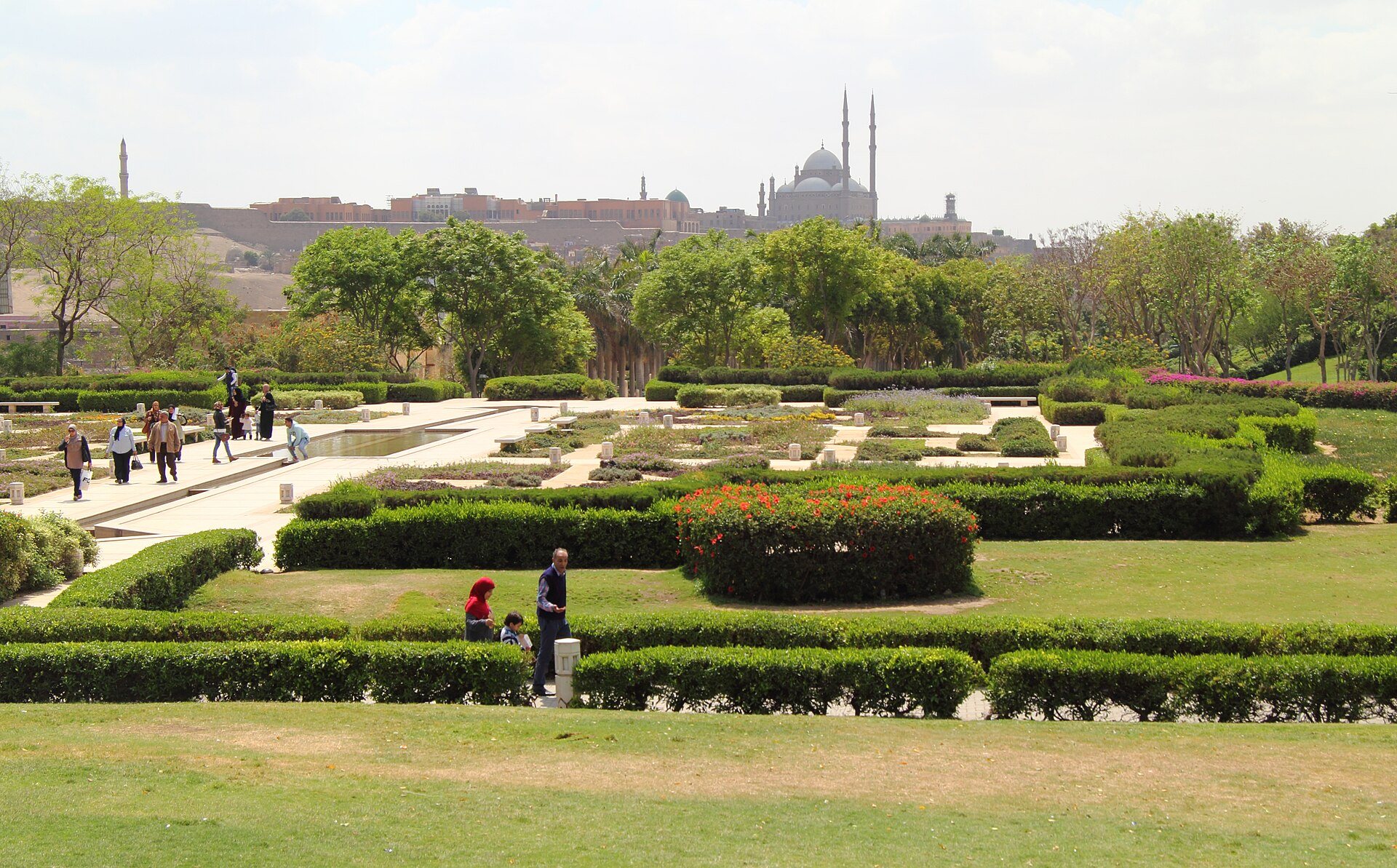
That matters more in Cairo than in most cities, because at street level the place is impossible to read. From the top you can see the river, the islands, the medieval city with its minarets, the Cairo Citadel on its hill and, on a clear day, the pyramids on the desert edge. This guide covers the tower's history and design, what the deck is like, when the view is actually good, and how to get there.
History and Architecture
Built in the Early Republic
The tower was designed by the Egyptian architect Naoum Shebib and built in the first years of the republic as a statement of modern Egyptian engineering. It was the tallest structure in Africa when it opened.
The Lotus Design
The shaft is a concrete tube wrapped in an open latticework screen that widens toward the top, and the form is conventionally described as a stylized lotus, the ancient emblem of Upper Egypt. The pattern is derived from pharaonic motifs, which puts the building squarely in the mid-century tradition of looking for a modern national architecture in the ancient one.
The Story About the Funding
There is a well-known story that the tower was built with American money originally intended as a personal inducement to Nasser, and that he spent it on a monument instead as a deliberate snub. It is told constantly in Cairo, it is a good story, and it is not a documented fact. Treat it as part of the building's folklore rather than its history.
Refurbishment
The tower was closed for a substantial refurbishment and later reopened with the elevators, the deck and the catering floors overhauled. It remains a state-run attraction.
The Observation Deck
Getting to the Top
An elevator runs up the shaft to the upper floors, where the top level is an open-air circular gallery with a mesh screen, and the floor below holds a revolving restaurant with a café level beneath it. The ride up is quick; the queue for it can be much slower.
What the Deck Is Like
It is open to the air, breezy and loud with the city below, with a metal guard and mesh that is fine to look through and awkward to photograph through at some angles. It is a working viewing platform rather than a polished visitor attraction, and expectations set to that are rarely disappointed.
Eating There
The revolving restaurant and the café have changed operators, menus and opening arrangements several times, and both have been closed for periods. If a meal at the top is the point of your visit rather than a bonus, check that it is running before you go.
Tickets
Tickets are sold at the base, with a separate rate for foreign visitors and a reduced rate for children. Prices, closing times and the status of the restaurant are revised regularly, so check them on the day rather than relying on a published figure.