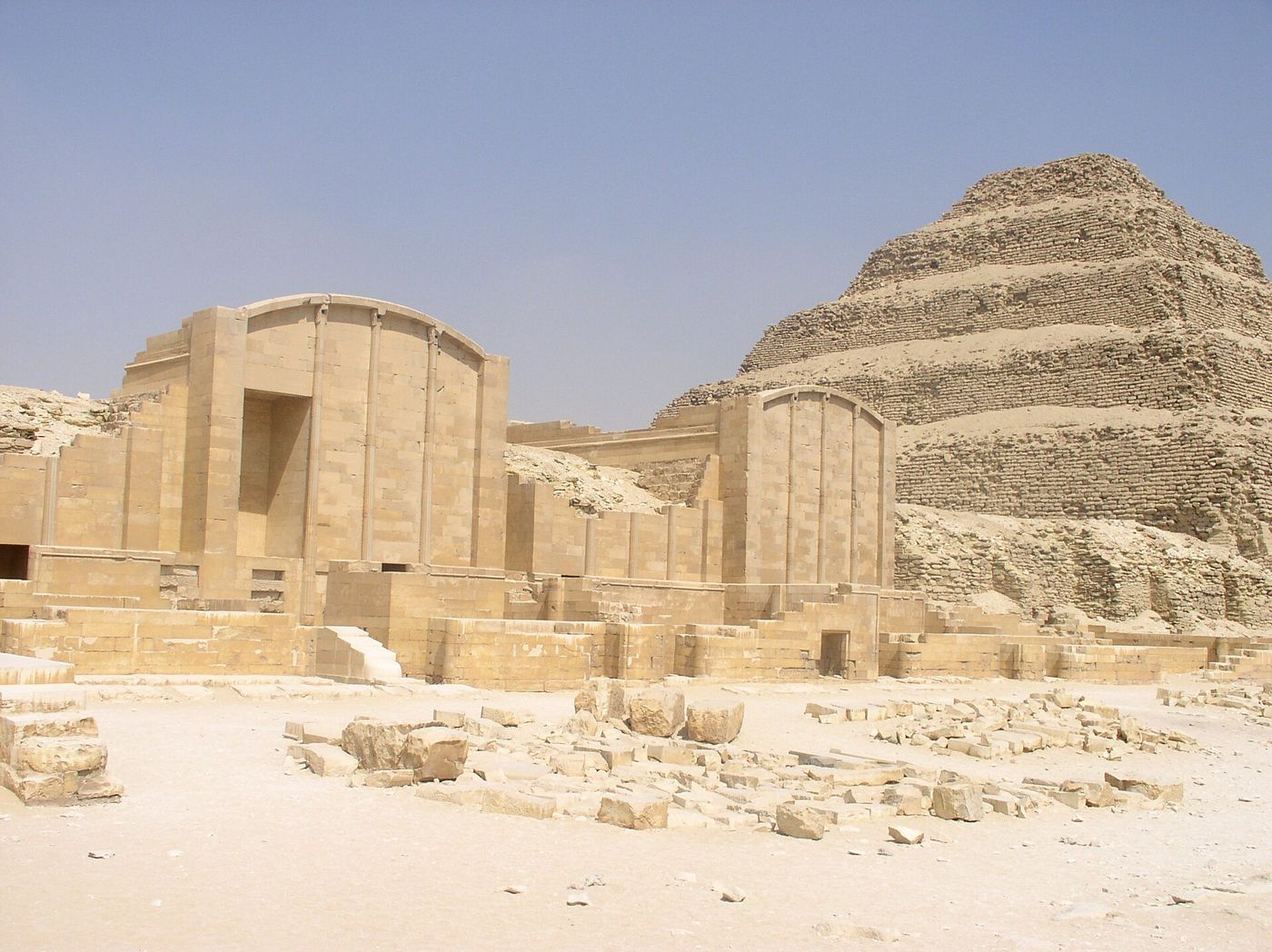
Djoser's Sed Festival court
The two courts in front of the Step Pyramid recreate the setting of the Sed Festival, a royal rite to renew the king's power; the buildings along the eastern court copy in stone the temporary shrines used in the festival.
Home / Attractions / Saqqara
Cairo & Giza · Southwest of Cairo, west of the Nile
The great cemetery of ancient Memphis, with Djoser's Step Pyramid, the first pyramid ever built, and the ruins of the capital itself at Mit Rahina.
Saqqara is one of the most important cemeteries of Memphis, 40 km southwest of Cairo. Its name most likely comes from Sokar, the god of the necropolis. Kings and nobles were buried here from the first two dynasties on, and it holds the Step Pyramid of Djoser, the first pyramid the Egyptians ever built and the oldest known Egyptian stone structure.
Memphis, near the modern village of Mit Rahina, was the first capital of ancient Egypt and the seat of government in the Old Kingdom, and a center of the worship of the god Ptah. UNESCO inscribed Memphis and its Necropolis, the pyramid fields from Giza to Dahshur, as a World Heritage site in 1979. Today the ruins at Mit Rahina hold an open-air museum with a colossal statue of Ramesses II.
The two courts in front of the Step Pyramid recreate the setting of the Sed Festival, a royal rite to renew the king's power; the buildings along the eastern court copy in stone the temporary shrines used in the festival.
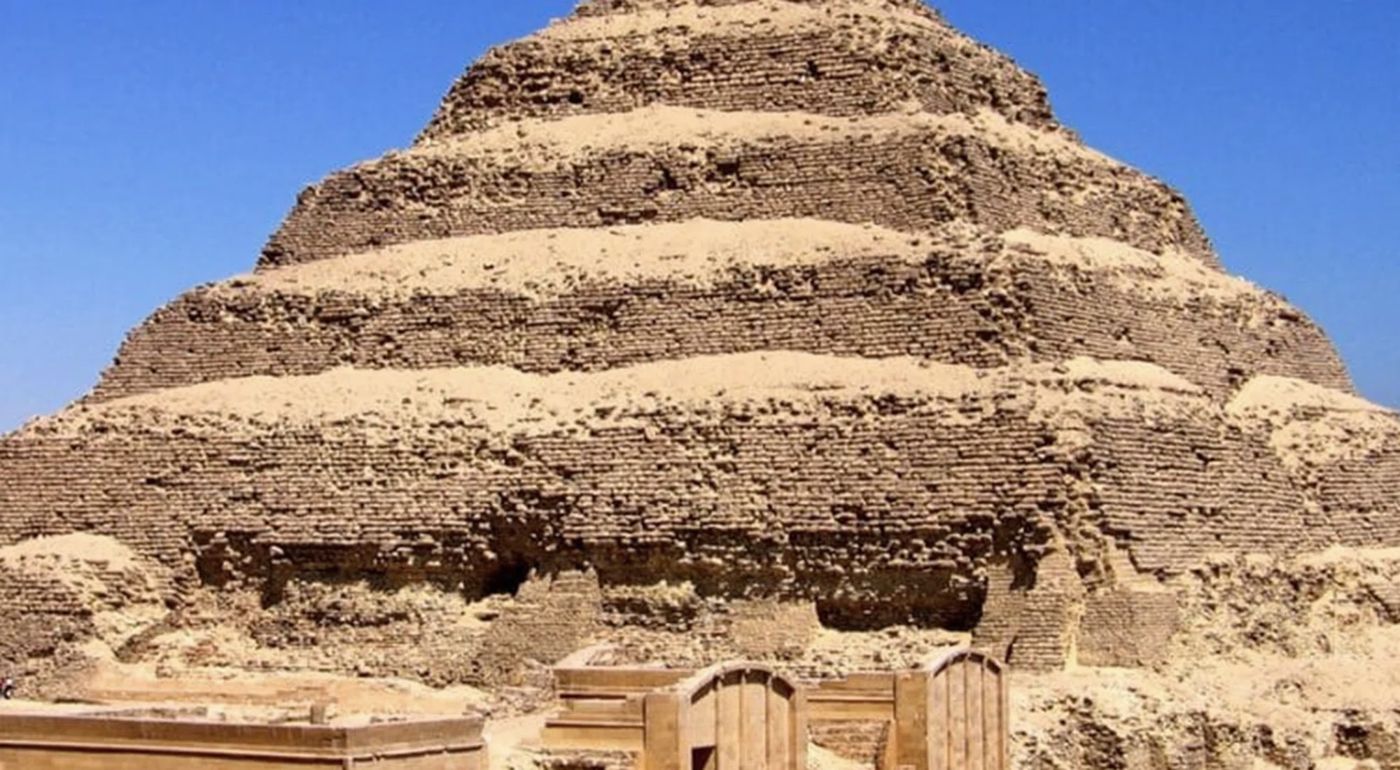
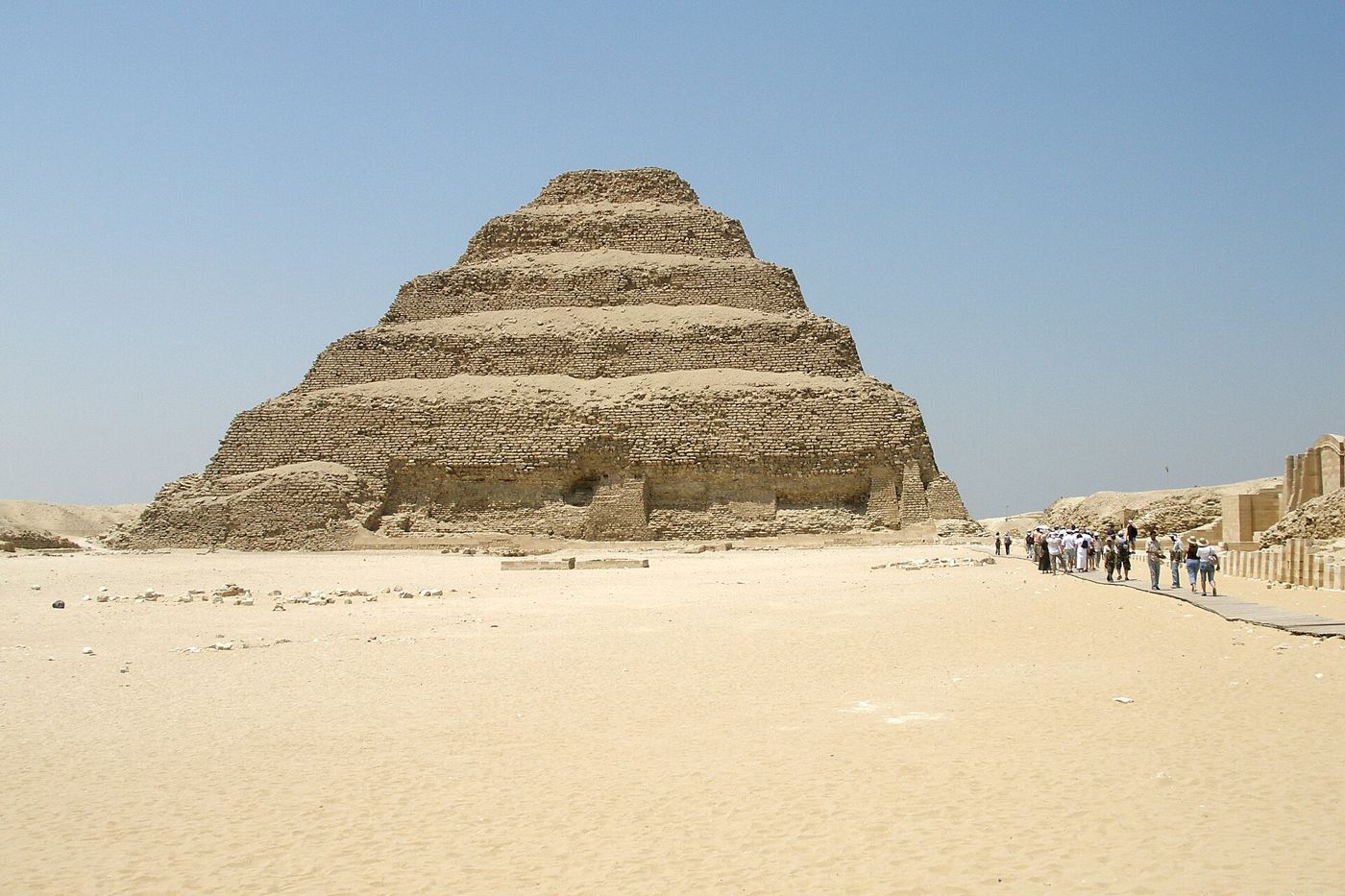
The first pyramid ever built: six stacked mastabas forming its steps. Going inside is a separate ticket; two Ministry pages give different prices for it.
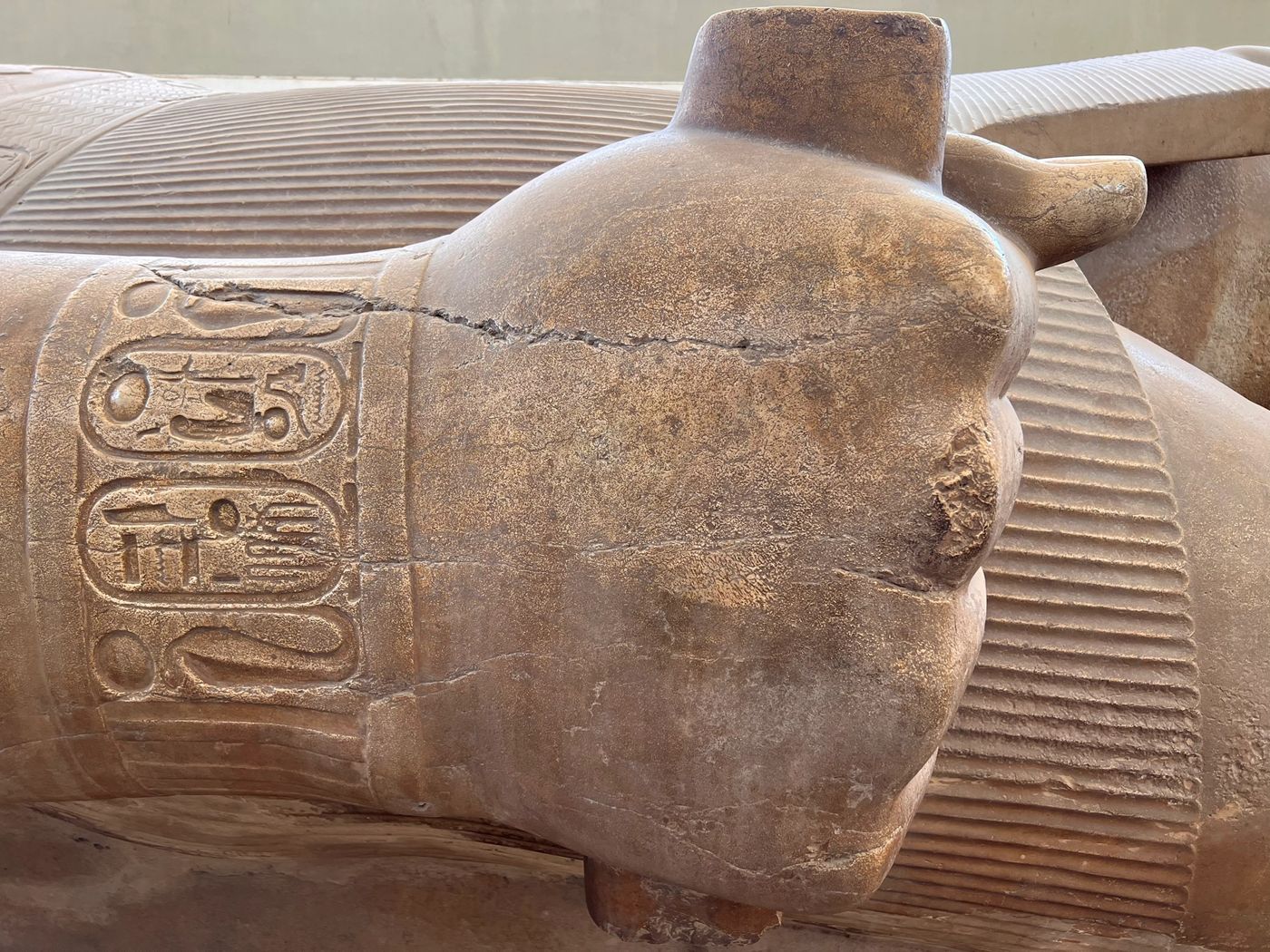
In the open-air museum at Mit Rahina, on the site of ancient Memphis, lies a colossal statue of Ramesses II, which UNESCO lists among the outstanding structures of Memphis.
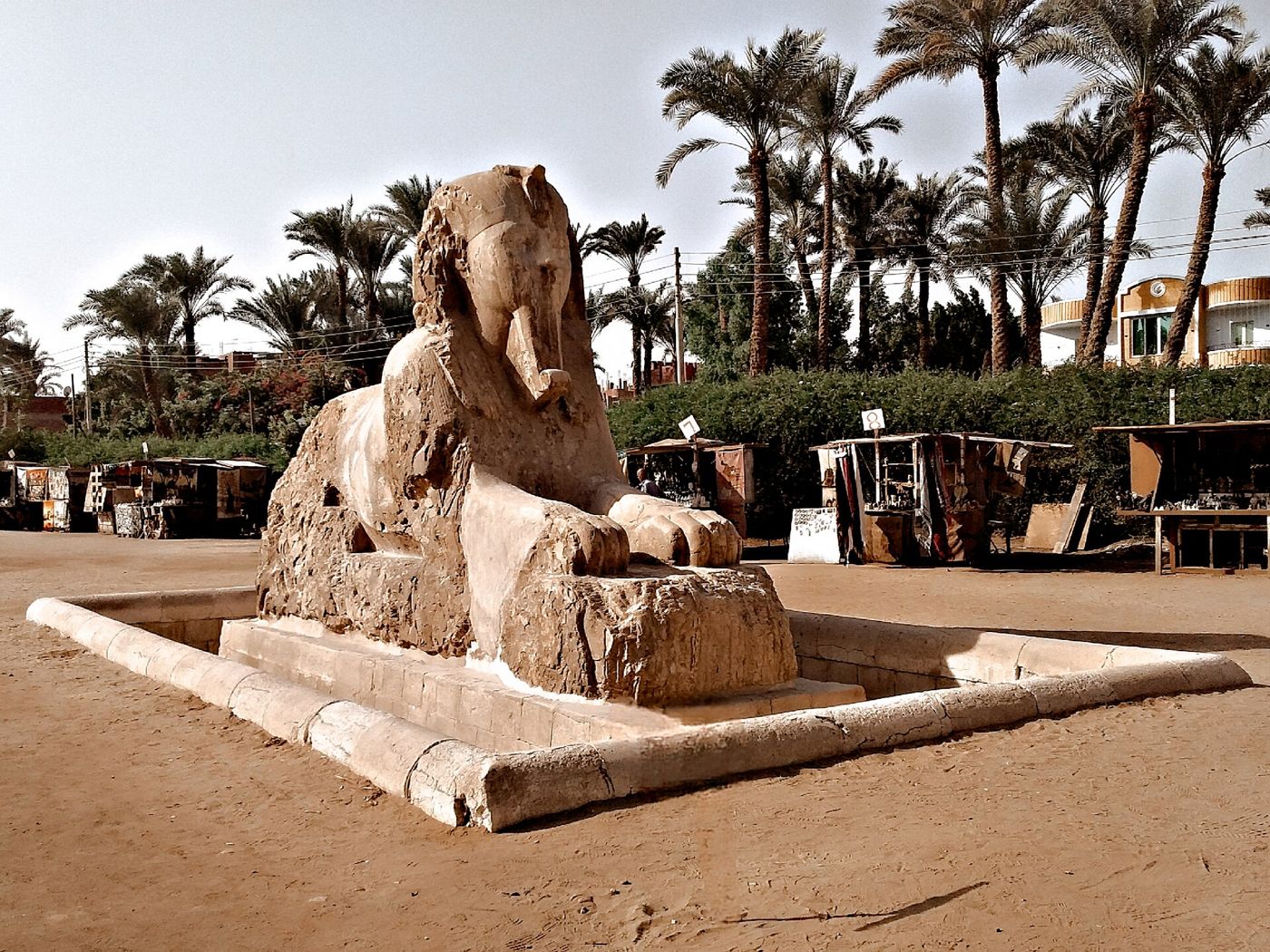
Also in the Memphis open-air museum, among the remains of the city whose great temple was dedicated to Ptah.
| Saqqara, summer and winter | 8:00 am – last entry 4:00 pm |
|---|---|
| Saqqara, Ramadan | 8:00 am – last entry 3:30 pm |
| Memphis, summer and winter | 8:00 am – last entry 4:00 pm |
| Memphis, Ramadan | 9:00 am – last entry 3:00 pm |
The Ministry's monuments website gives 8:00 am to 4:00 pm daily for the Saqqara site, and 8:00 am to 5:00 pm for the Step Pyramid, the Serapeum and the Imhotep Museum.
Ministry of Tourism and Antiquities ticketing portal, checked August 2026
| Adult | Student | |
| Saqqara site, with the Imhotep Museum | EGP 600 | EGP 300 |
| Inclusive: site, Imhotep Museum, Nobles and New Kingdom tombs, Mereruka, Mehu | EGP 1,400 | EGP 700 |
| Nobles Tombs + New Kingdom Tombs | EGP 400 | EGP 200 |
| Tomb of Mereruka | EGP 200 | EGP 100 |
| South Tomb, Djoser complex | EGP 300 | EGP 150 |
| Memphis open-air museum (Mit Rahina) | EGP 200 | EGP 100 |
Prices in Egyptian pounds, as of August 2026
| Downtown / Zamalek (back from Memphis) | 29.5 km · about 26 min |
|---|---|
| Giza hotels (back from Memphis) | 24.5 km · about 28 min |
| New Cairo (back from Memphis) | 39.8 km · about 39 min |
Without traffic, from our tours' map routing
Our Pyramids, Memphis and Saqqara day starts at Giza. Saqqara is 18.3 km on from the Sphinx, about 27 minutes, and Memphis 6.3 km beyond, about 14 minutes. At Saqqara you see the Step Pyramid of Djoser, the Pyramid of Teti and nobles' tombs; at Memphis, the colossal statue of Ramesses II and the Alabaster Sphinx. Entrance fees to the sites on the program are included.
The coolest months are December to February.
World Meteorological Organization climate normals (monthly averages, not forecasts)
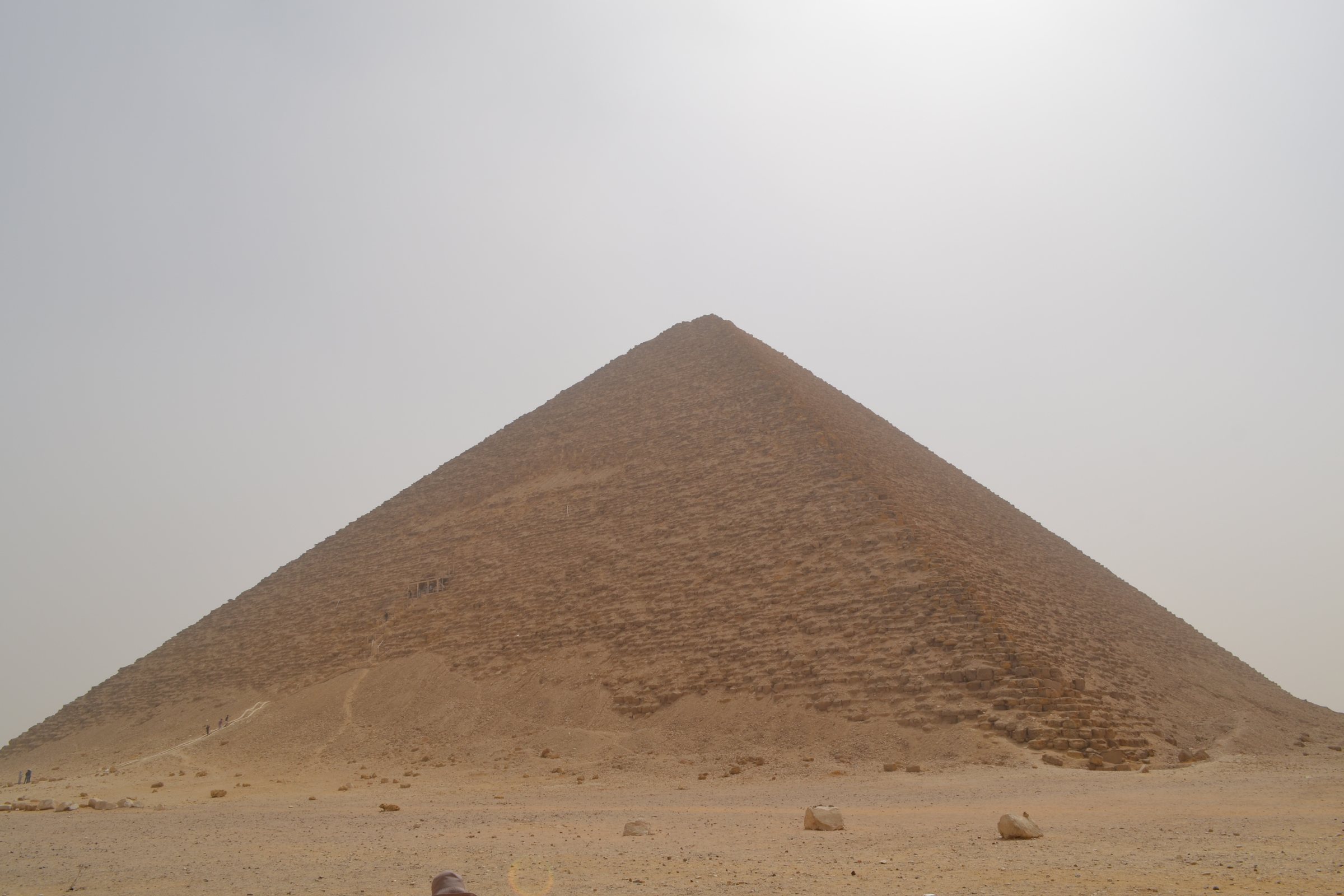
The Step Pyramid of Djoser, the first pyramid ever built and the oldest known Egyptian stone structure. Saqqara is also one of the main cemeteries of Memphis, with royal pyramids, nobles' tombs and the Serapeum.
The Ministry of Tourism and Antiquities puts it 40 km southwest of Cairo. On our tours it follows Giza: 18.3 km from the Sphinx, about 27 minutes without traffic.
EGP 600 for foreign adults and EGP 300 for foreign students, as of August 2026, with the Imhotep Museum included. The inclusive ticket with the main tombs is EGP 1,400.
King Djoser (Netjerykhet), in the early Third Dynasty. His architect Imhotep may well have been behind its design of six stacked mastabas.
The ruins of the first capital of ancient Egypt at Mit Rahina, with an open-air museum holding the colossal statue of Ramesses II and the Alabaster Sphinx. Entry is EGP 200 for foreign adults, as of August 2026.
Underground galleries at Saqqara where the sacred Apis bulls of the god Ptah were buried, from the Eighteenth Dynasty to the Ptolemaic Period. An avenue of sphinxes leads to it.
Sources: Egypt's Ministry of Tourism and Antiquities; UNESCO World Heritage Centre; UK Foreign, Commonwealth & Development Office.
Guides
 Giza pyramids or Saqqara: which day trip first?Giza first, then Saqqara: what each site has, hours, tickets and the drive between them.
 Best Cairo day tours for first-time visitorsOur Cairo tours compared by what they cover and how long they run, and how to pair them without repeats.
 First time in Egypt: which day tours to start withGiza and a museum in Cairo, both banks in Luxor, Philae in Aswan: where a first trip starts.