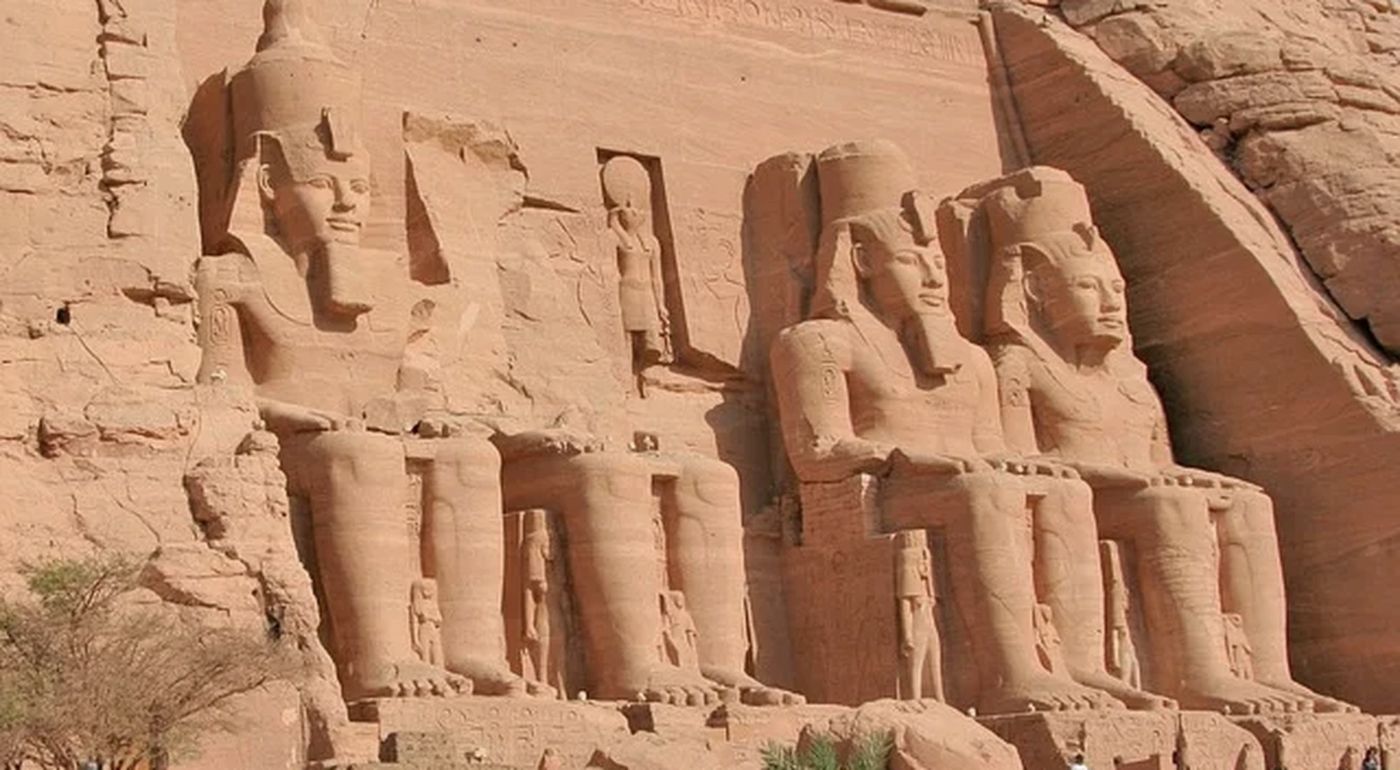
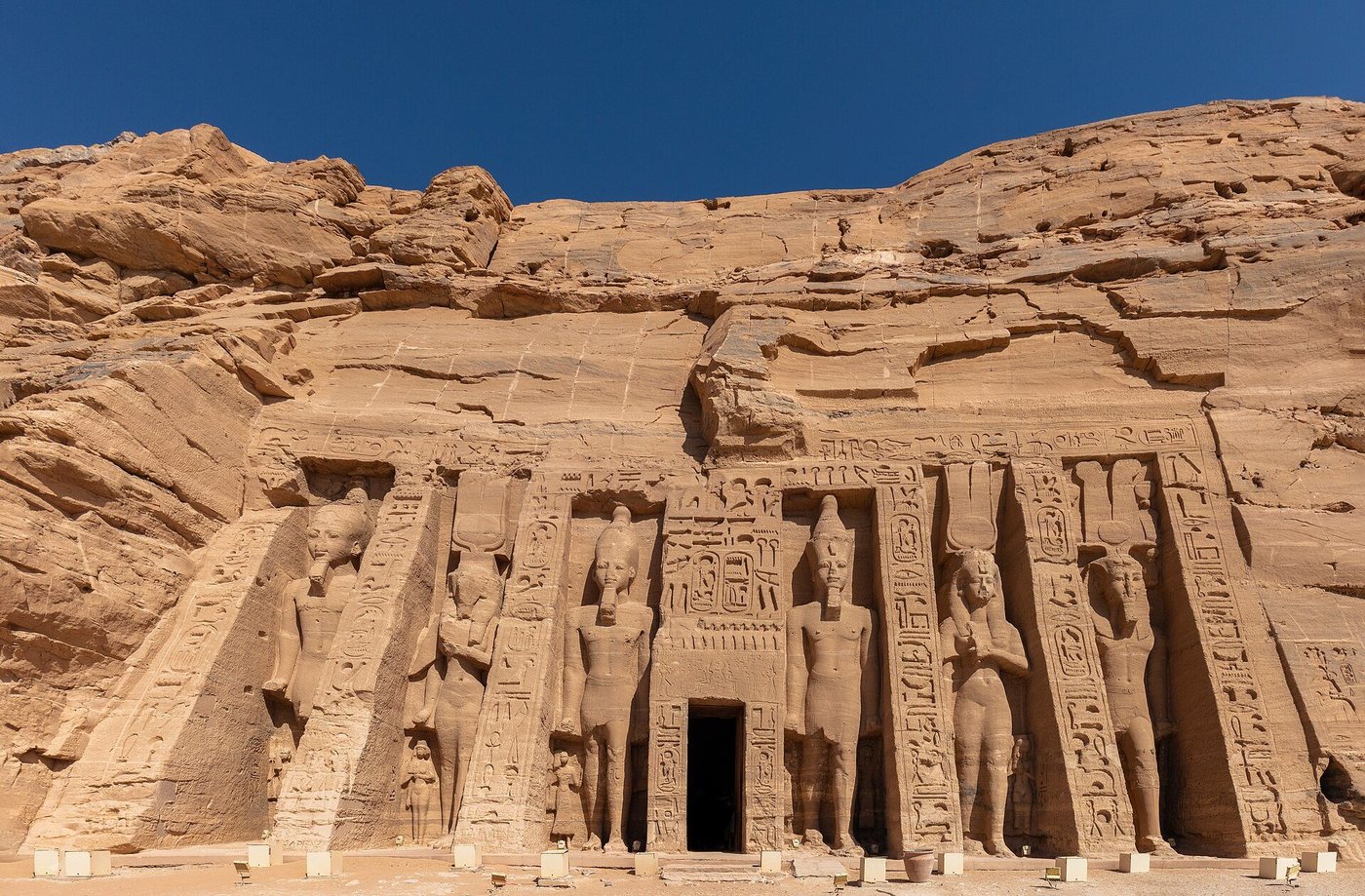
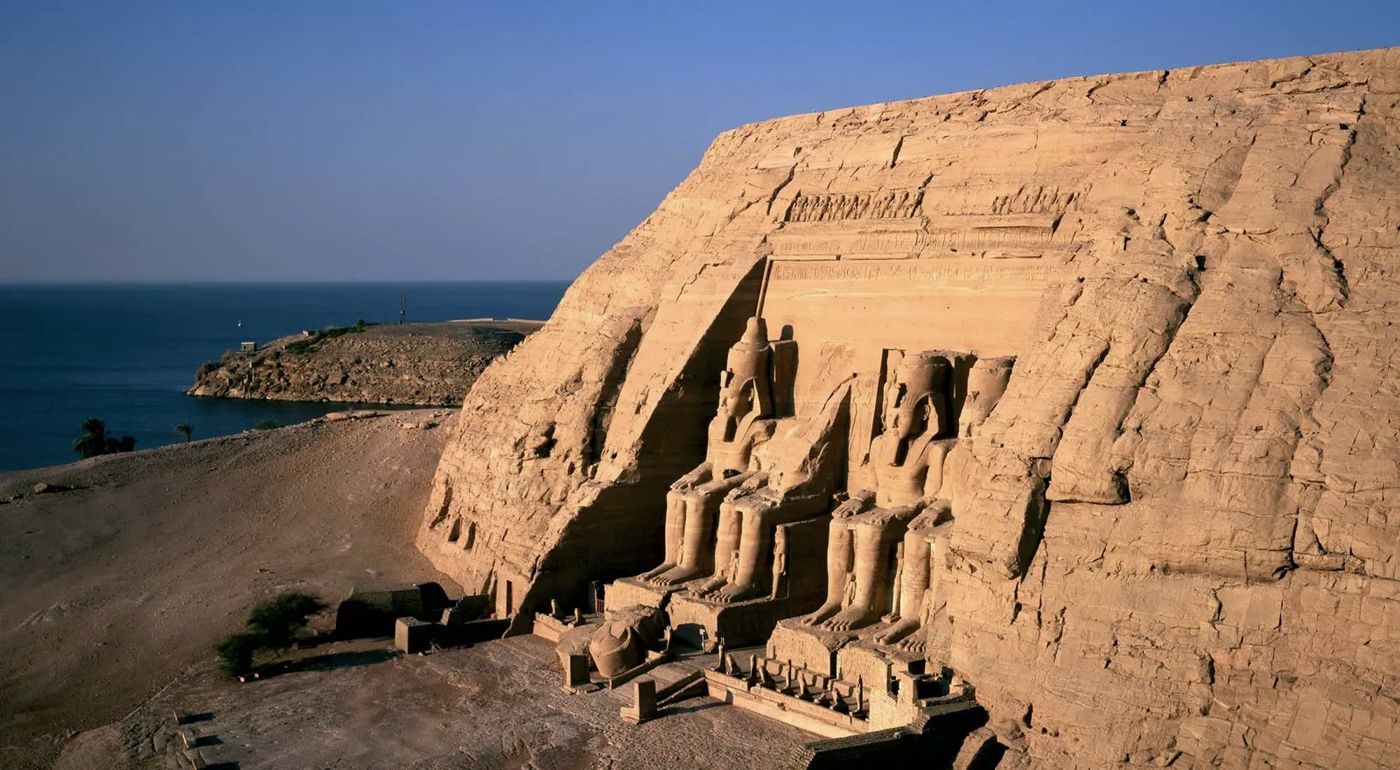
Abu Simbel is the site of two temples that Ramses II had cut into a sandstone cliff on the west bank of the Nile, in Nubia near Egypt's southern border. The Great Temple, fronted by four seated colossi of the king, holds a sanctuary of Amun-Ra, Ra-Horakhty, Ptah and the deified Ramses; the Small Temple just to the north is dedicated to the goddess Hathor and to Queen Nefertari.
The temple was built so that on two days a year, February 22 and October 22, the sun's rays cross the main hall and light the statues in the sanctuary. When Lake Nasser, the reservoir of the Aswan High Dam, threatened to drown both temples, an international team cut them apart and rebuilt them on higher ground. They are part of the UNESCO World Heritage site Nubian Monuments from Abu Simbel to Philae, inscribed in 1979.
A short history
Ramses IIRamses II (reigned 1279–13 BCE) built both temples at the southern frontier of pharaonic Egypt, facing Nubia; the Great Temple was cut into the living rock around 1264 BCE.
Greek visitorsGreek mercenaries serving Egypt in the 6th century BCE scratched graffiti on the southern pair of colossi, early evidence of the history of the Greek alphabet.
RediscoveryUnknown to the outside world until the Swiss researcher Johann Ludwig Burckhardt rediscovered them in 1813; Giovanni Battista Belzoni first explored them in 1817.
The rescueUNESCO began a fund-raising campaign in 1959. Between 1963 and 1968 engineers and workers, with funds from more than 50 countries, cut away the top of the cliff, took both temples apart and rebuilt them more than 200 feet (60 meters) above their old site: some 16,000 blocks in all.
World HeritageIn 1979 Abu Simbel, Philae and the other Nubian monuments were inscribed together as a UNESCO World Heritage site.
What you'll see
The four colossi
Seated figures of Ramses II, each 66 feet (20 meters) high, two on either side of the entrance. One fell in an ancient earthquake and its pieces still lie on the ground; small figures of his children, Queen Nefertari and his mother stand at their feet.
Inside the Great Temple
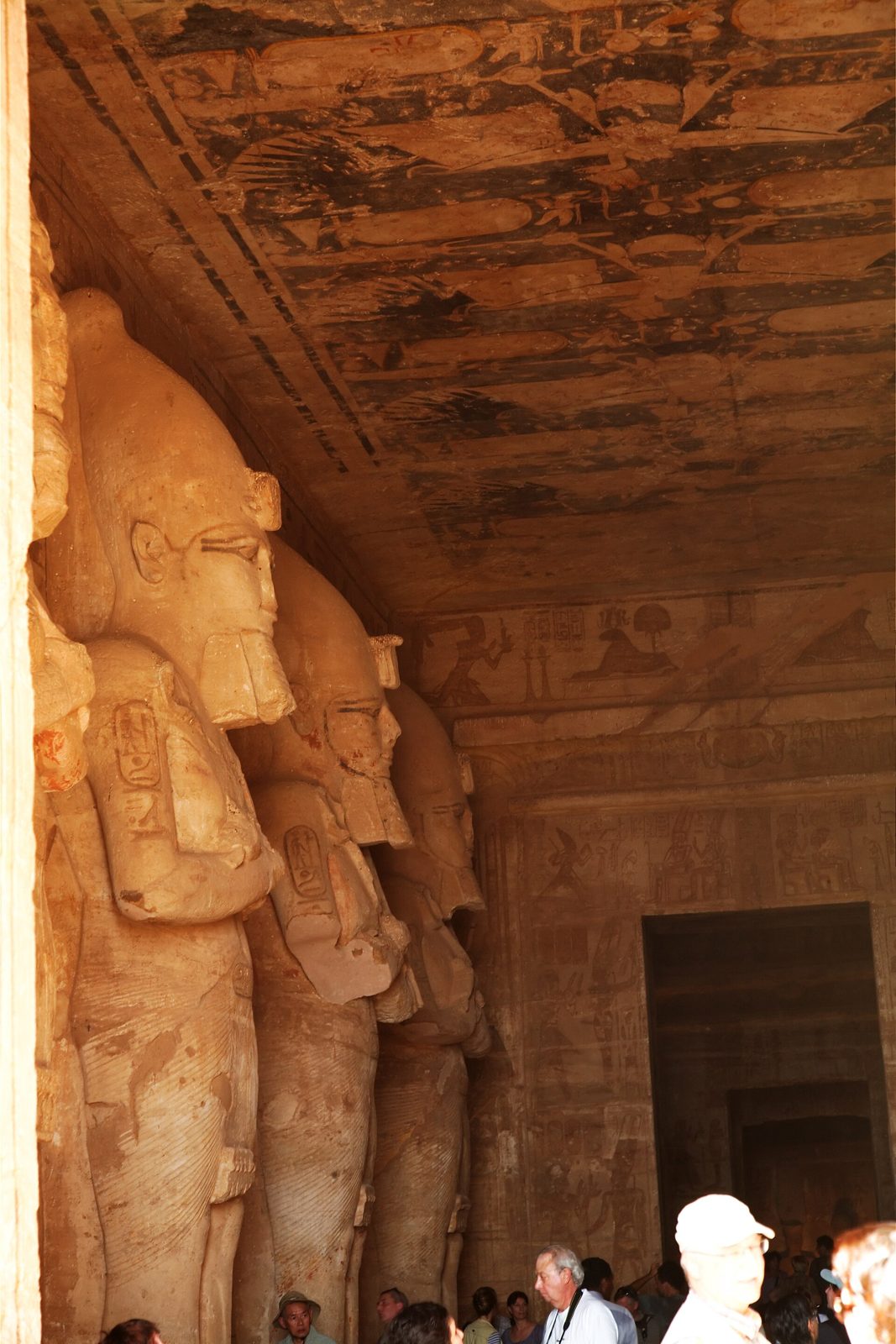
Three halls run 185 feet (56 meters) into the cliff, lined with statues of the king in the form of Osiris. At the end, the sanctuary holds four seated gods: Amun-Ra, Ra-Horakhty, Ptah and Ramses himself.
The Temple of Nefertari
Just north of the Great Temple, dedicated to Hathor and to Queen Nefertari. Its facade statues stand 35 feet (10.5 meters) high, and the queen is shown the same size as the king, a rare display.
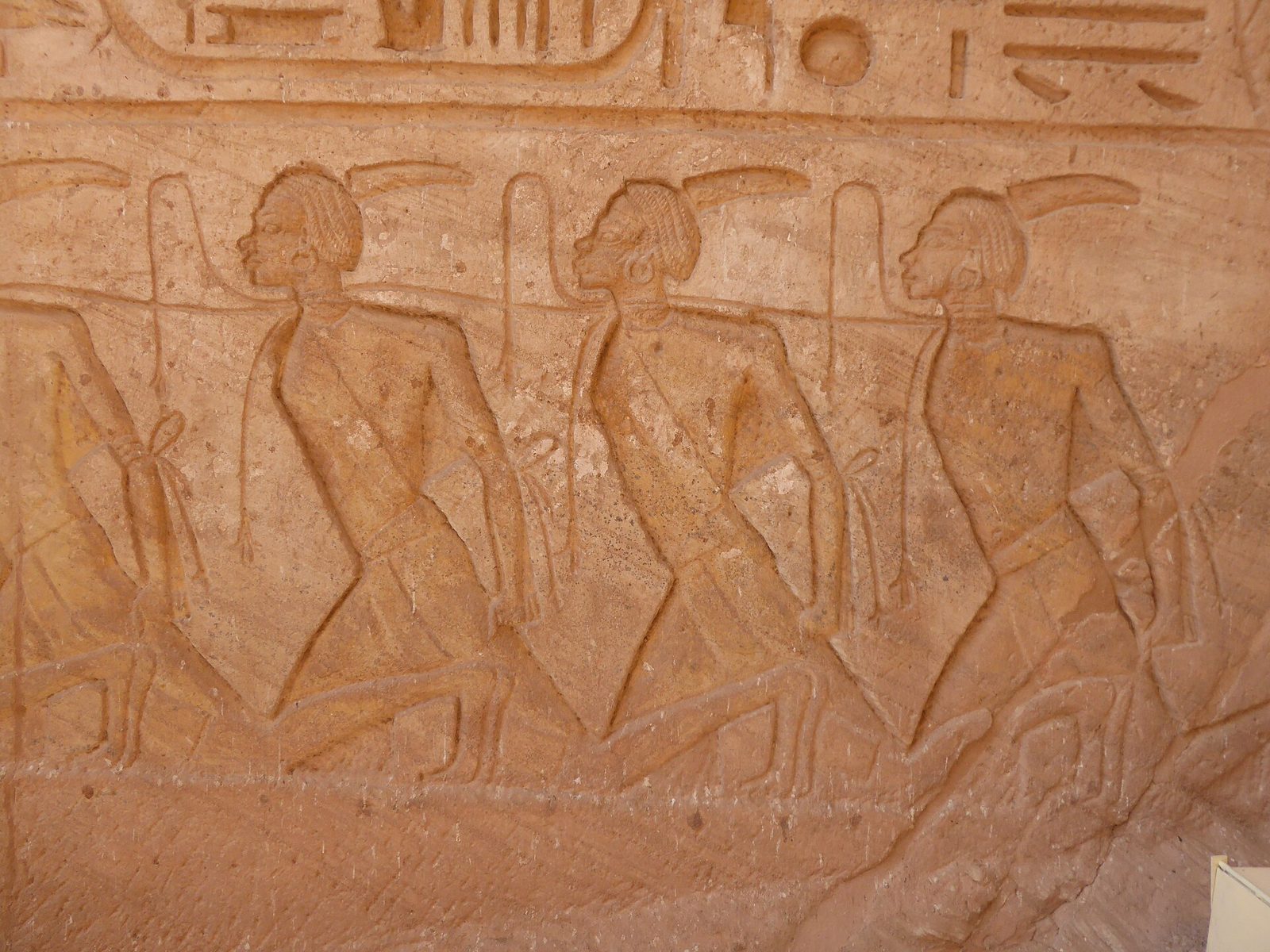
The wall reliefs
The halls are decorated with painted scenes of the king's claimed victory at the Battle of Kadesh.
Opening hours and tickets
Opening hours
Summer
6:00 am · last entry 4:00 pm
Winter
6:00 am · last entry 4:00 pm
Ramadan
6:00 am · last entry 4:00 pm
The Ministry's monuments website gives 6:00 am to 5:00 pm daily.
Ministry of Tourism and Antiquities ticketing portal, checked August 2026
Tickets, foreign visitors
Adult
Student
General admission (Ministry monuments website)
EGP 750
EGP 375
General admission (Ministry ticketing portal)
EGP 822
EGP 445.5
On February 22 and October 22
EGP 1,200
EGP 600
Two official Ministry sources give different general-admission prices; both are shown
Children under 6 enter free
Students: valid ID, age 24 or under
Prices in Egyptian pounds, as of August 2026
Getting there and how the visit runs
Drive to the site
From Aswan hotels
283.4 km · about 3 h 26 min
Without traffic, from our tours' map routing
Our Abu Simbel day runs by road in a private air-conditioned vehicle from your Aswan hotel. Your Egyptologist guide takes you through the Great Temple of Ramses II, then the Temple of Nefertari, and the drive back to Aswan is 283.2 km. Entry to the temples is included.
Before you go
What to wear and bring
Modest clothing
Comfortable shoes for sand and stone
Sun protection and a hat
Photos
Photos with a mobile phone are free of charge
Ask before photographing people
Drones need Ministry of Defence permission
Average daily high in Aswan (°C)
22.9°J
24.8°F
29.4°M
35.2°A
39°M
41.2°J
41.4°J
41.2°A
39.5°S
35.7°O
29°N
24.2°D
The coolest months are December to February.
World Meteorological Organization climate normals (monthly averages, not forecasts)
Questions about Abu Simbel Temples
What is the best way to travel from Aswan to Abu Simbel?
Our Abu Simbel tour goes by road in a private air-conditioned vehicle from your Aswan hotel: 283.4 km, about 3 h 26 min without traffic.
Can you go inside Abu Simbel Temple?
Yes. Inside the Great Temple, three halls run 185 feet (56 meters) into the cliff, past statues of the king, to a sanctuary with four seated gods.
How did they move Abu Simbel?
Between 1963 and 1968 an international team cut away the top of the cliff, took both temples apart into some 16,000 blocks and rebuilt them more than 200 feet (60 meters) above their old site, with funds from more than 50 countries.
When does the sun light up the sanctuary?
On February 22 and October 22, when the sun's rays cross the main hall and light the statues in the sanctuary. On those two days the foreign adult ticket is EGP 1,200.
How much is the ticket to Abu Simbel?
Two official Ministry sources differ: EGP 750 on the monuments website and EGP 822 on the ticketing portal for foreign adults, and EGP 375 or EGP 445.5 for students, as of August 2026.
What are the opening hours?
From 6:00 am with last entry at 4:00 pm in every season, per the Ministry's ticketing portal; the Ministry's monuments website gives 6:00 am to 5:00 pm.
Sources: Encyclopaedia Britannica; UNESCO World Heritage Centre; Egypt's Ministry of Tourism and Antiquities; World Meteorological Organization.