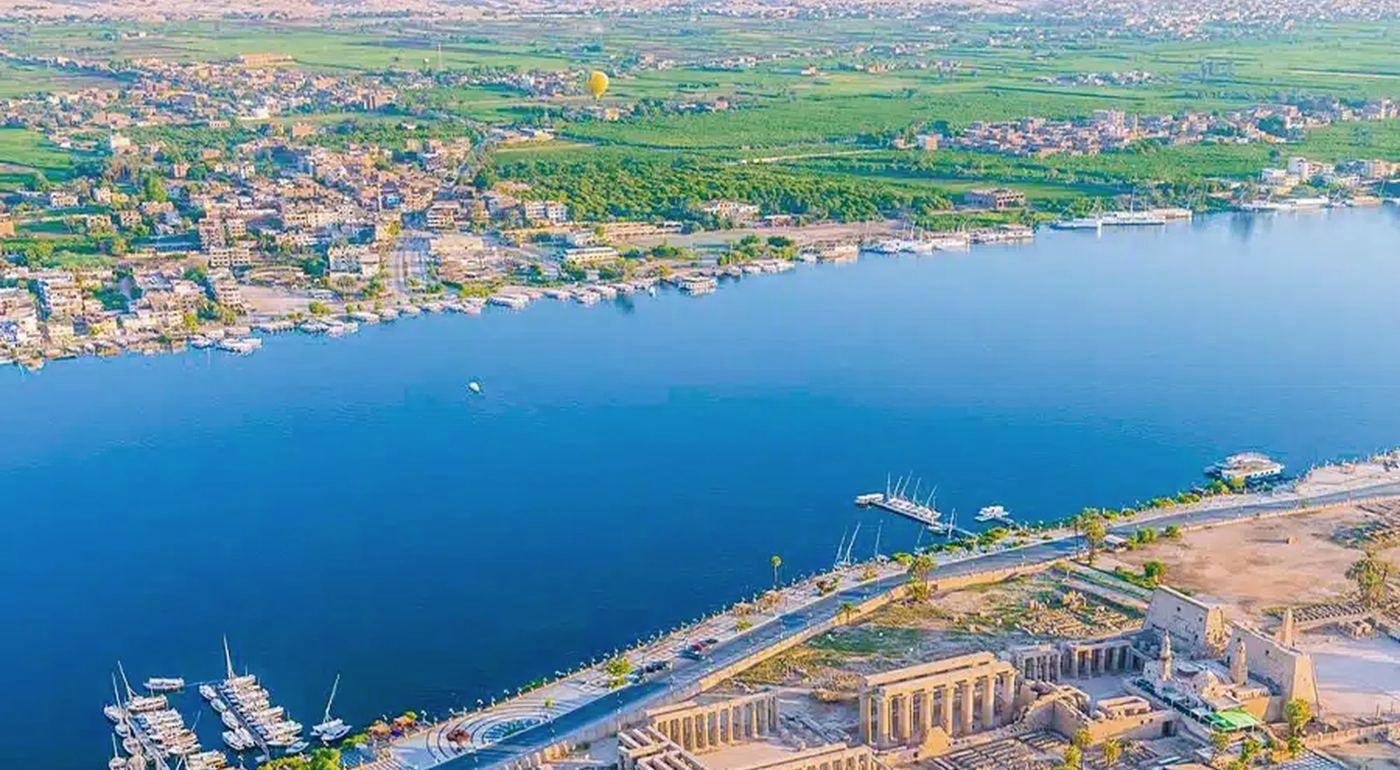
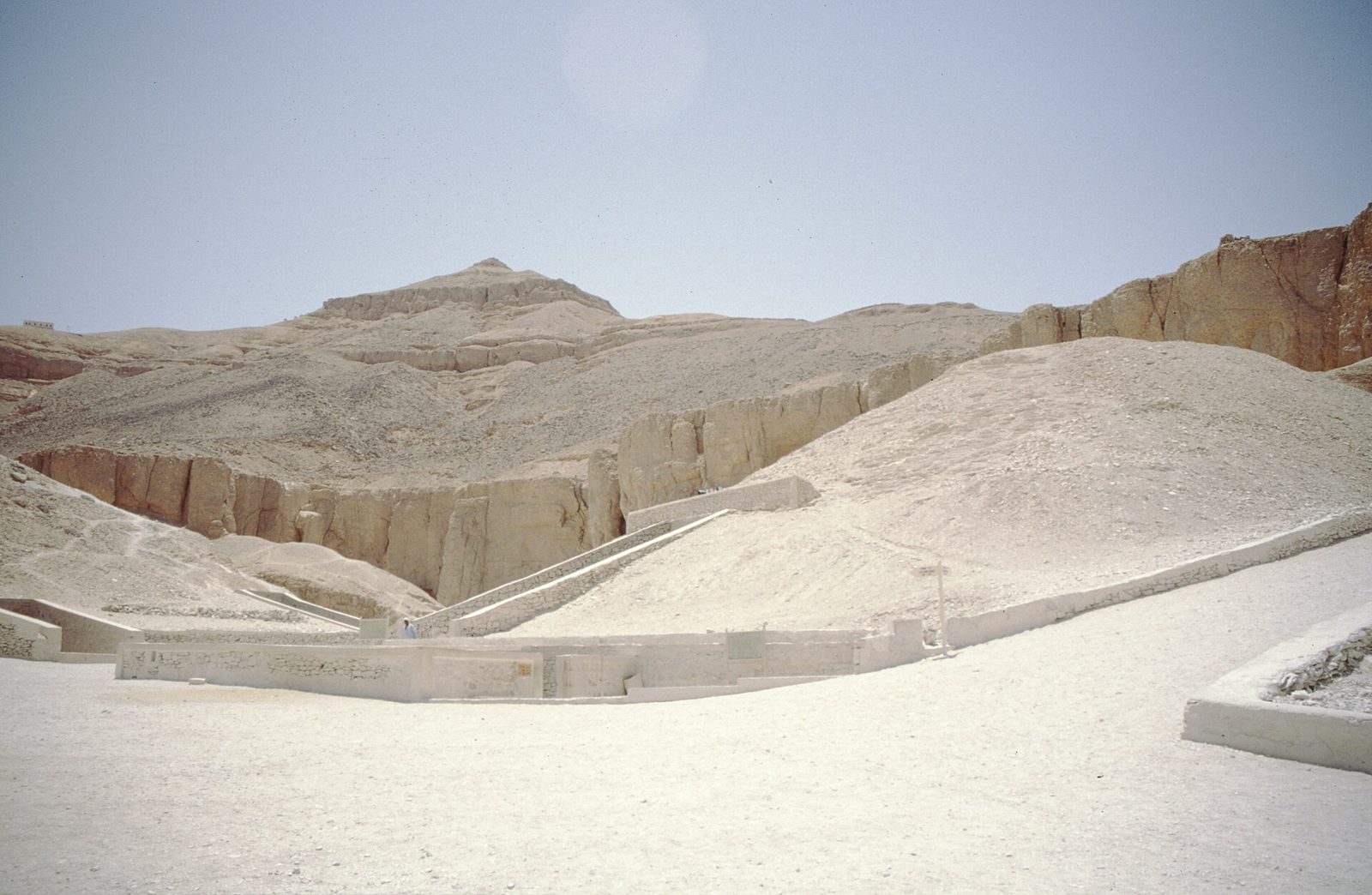
The Valley of the Kings is a long, narrow valley in the hills just west of the Nile, behind Deir el-Bahari, in what was ancient Thebes. It was the burial site of almost all the kings of the 18th, 19th and 20th dynasties, from Thutmose I to Ramses X, and holds 62 known tombs.
The New Kingdom kings hid their tombs deep in the mountain to protect their rich burials; pharaohs, several queens, a few high officials and many sons of Ramses II were buried here. Almost every tomb was emptied in antiquity. Only Tutankhamun's small tomb survived intact, and its treasures, found in 1922, are now in the Grand Egyptian Museum in Giza. UNESCO inscribed the valley as part of Ancient Thebes with its Necropolis in 1979.
A short history
Thutmose IThe first confirmed royal burial in the valley is that of Thutmose I (c. 1504–1492 BCE), third king of the 18th dynasty. Ineni, the official who dug his tomb, wrote that it was done with "none seeing, none hearing."
HatshepsutHer tomb, number 20, is the longest in the valley: its burial chamber lies nearly 700 feet (215 meters) from the entrance and 320 feet (100 meters) down in the rock.
TutankhamunHe reigned c. 1333–24 BCE and was buried in a small tomb, KV 62, hastily converted for his use. Its entrance was forgotten under shelters built by the workmen of the tomb of Ramses VI, until Howard Carter's team found it in 1922.
Ramses II's sonsTomb 5, the largest and most complex in the valley, was built for many of the sons of Ramses II. Found earlier but dismissed, it was located again in the late 1980s and partly excavated in the 1990s.
AntiquityIn the 21st dynasty the tombs were emptied to protect the royal mummies and recycle their goods. Greek travelers in Strabo's time, the 1st century BCE, could visit 40 tombs, and Coptic monks later reused several.
What you'll see
Inside a royal tomb
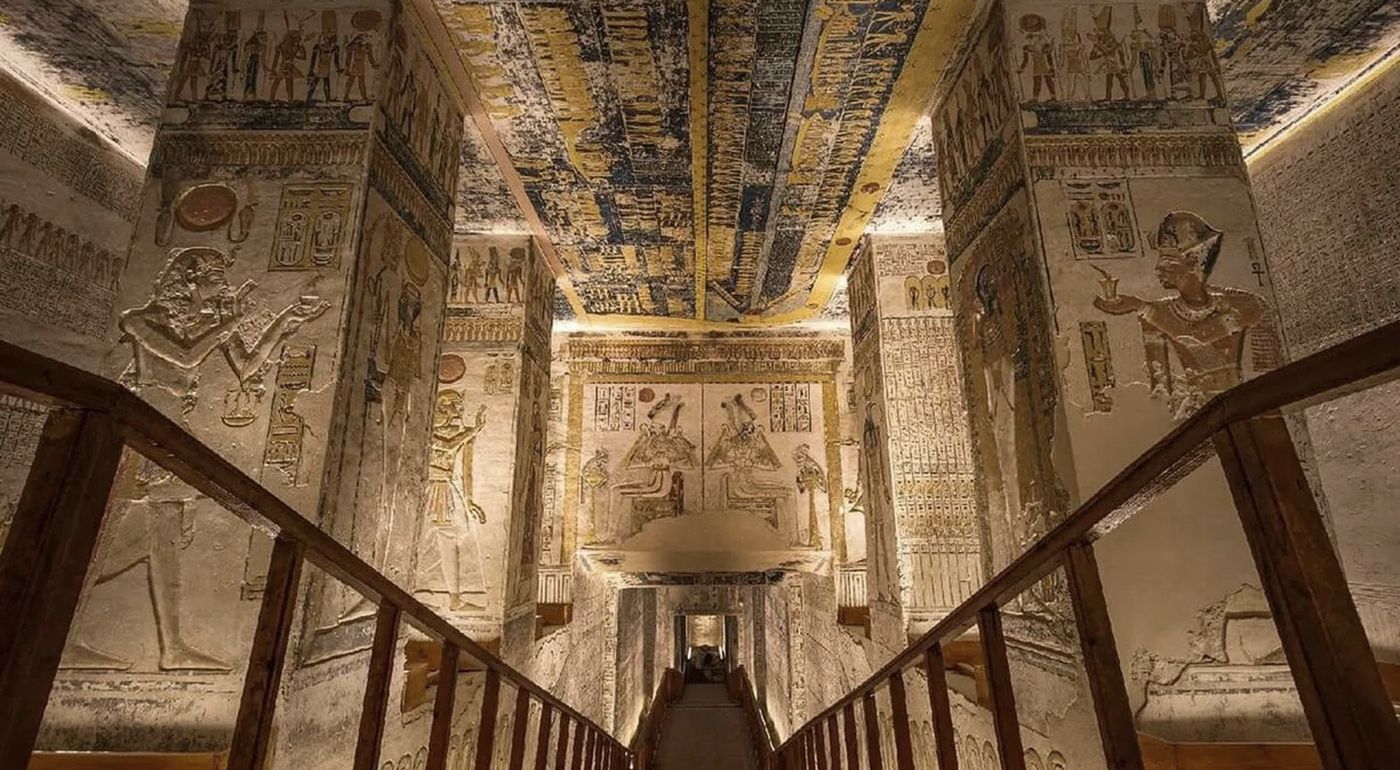
A corridor cut deep into the hill descends past pillared rooms to the burial chamber. Walls and ceilings carry painted scenes of the king with the gods, texts such as the Book of Gates, and astronomical figures. The tomb of Ramses VI, shown here, is one of the special tombs with an extra ticket.
Tutankhamun's tomb
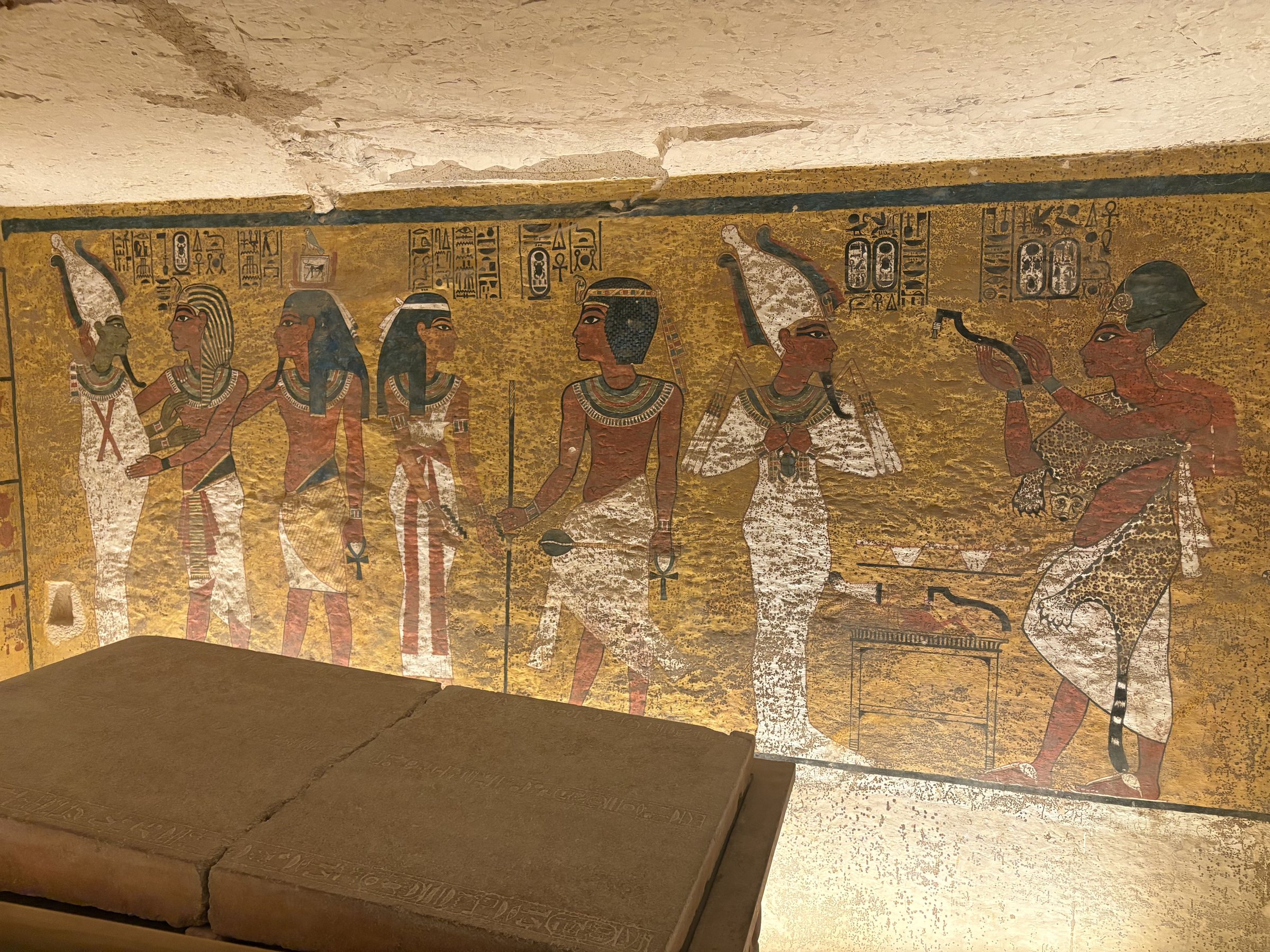
KV 62 is small: when Howard Carter's team opened it in 1922, four gilded shrines practically filled the burial chamber, around the stone sarcophagus and a nest of three coffins, the innermost of solid gold.
Opening hours and tickets
Opening hours
Summer
6:00 am · last entry 5:00 pm
Winter
6:00 am · last entry 4:00 pm
Ramadan
6:00 am · last entry 4:00 pm
The Ministry's monuments website gives 6:00 am to 5:00 pm daily.
Ministry of Tourism and Antiquities ticketing portal, checked August 2026
Tickets, foreign visitors
Adult
Student
Valley of the Kings, general admission
EGP 750
EGP 375
Children under 6 enter free
Students: valid ID, age 24 or under
Tutankhamun's tomb and other special tombs, such as those of Seti I and Ramses VI, need extra tickets, not included on our tours
Prices in Egyptian pounds, as of August 2026
Getting there and how the visit runs
Drive to the site
Luxor hotels to the Colossi of Memnon
14.9 km · about 18 min
Colossi of Memnon to Hatshepsut Temple
4.3 km · about 8 min
Hatshepsut Temple to the valley
6.3 km · about 16 min
From Aswan hotels
225.2 km · about 2 h 52 min
Without traffic, from our tours' map routing
Our West Bank tours drive from your Luxor hotel to the Colossi of Memnon and Hatshepsut Temple, then up to the valley; general admission is included, while Tutankhamun's tomb and the other special tombs are optional extras. The valley is also on our full-day Luxor tours and on day trips from Aswan and from Sharm El Sheikh by plane (flights not included).
Before you go
What to wear and bring
Modest clothing
Comfortable shoes for steps and slopes
Sun protection and a hat
Photos
Photos with a mobile phone are free of charge at Ministry sites
Camera tickets inside the tombs are not included on our tours
Ask before photographing people
Average daily high in Luxor (°C)
23°J
25.1°F
29.5°M
35.3°A
39°M
41.3°J
41.4°J
41°A
39.3°S
35.3°O
29°N
24.3°D
The coolest months are December to February.
World Meteorological Organization climate normals (monthly averages, not forecasts)
Questions about Valley of the Kings
What is the difference between the Valley of the Kings and the Valley of the Queens?
The Valley of the Kings holds the tombs of almost all the kings of the 18th to 20th dynasties. The Valley of the Queens, about 1.5 miles (2.4 km) west of Medinet Habu, holds more than 90 tombs of queens and some royal children of the 19th and 20th dynasties, Nefertari's among them; its ticket is EGP 220 for foreign adults.
How much does the Valley of the Kings cost?
General admission is EGP 750 for foreign adults and EGP 375 for foreign students, as of August 2026. Tutankhamun's tomb and the other special tombs cost extra.
Is King Tut buried in the Valley of the Kings?
Yes. Tutankhamun was buried in KV 62, a small tomb on the floor of the valley that Howard Carter's team found in 1922. His treasures are now in the Grand Egyptian Museum in Giza.
How many tombs are in the Valley of the Kings?
Britannica counts 62 known tombs; Egypt's Ministry of Tourism and Antiquities counts over sixty, plus twenty unfinished ones that are little more than pits.
What are the opening hours?
From 6:00 am, with last entry at 5:00 pm in summer and 4:00 pm in winter and Ramadan, per the Ministry's ticketing portal.
Sources: Encyclopaedia Britannica; Egypt's Ministry of Tourism and Antiquities; UNESCO World Heritage Centre; World Meteorological Organization.